PlantGrail newsletter, issue 1
Wet mix kills more plants than a missed watering
Root rot is the largest named Grail class. This week: the 2-inch test, a quick Monstera soil fix, and what your drainage holes are actually for.
Published
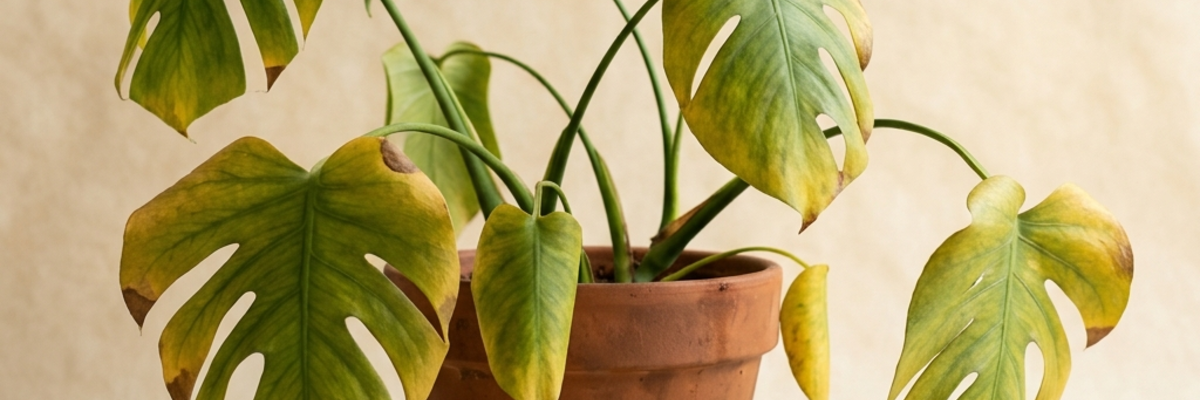
The one test that prevents most houseplant deaths
Every week, we analyze real-world plant rescue data from our Grail knowledge base. One pattern keeps surfacing above everything else: overwatering kills more houseplants than neglect, pests, and bad light combined.
The Grail snapshot shows root rot as the largest named failure class (214 records) and overwatering as the next water cluster (121). Too much water, not too little. The fix takes 5 seconds.
This week’s Grail insight
The 2-inch soil test
Stick your finger 2 inches into the soil. If it feels damp at all, do not water. That’s it. That’s the protocol.
Most plant parents water on a schedule — every Sunday, every 3 days, whenever they remember. But soil drying rate depends on pot size, humidity, light, season, and airflow. A calendar can’t account for any of that. Your finger can.
Recent 2025 analysis suggests that yellow leaves in Monstera deliciosa — the most commonly reported houseplant problem — are primarily caused by improper watering. Checking soil moisture before every watering session prevents the majority of cases. **
Quick win (under 60 seconds)
Check your drainage holes right now. Turn over your three favorite pots. If any of them are sitting in a decorative cache pot or saucer with standing water, dump it. Roots sitting in pooled water develop anaerobic zones within 48 hours — the first stage of root rot.
While you’re at it: if any pot feels much larger than the plant inside it, flag it for repotting. Oversized pots hold excess moisture and prevent the drying cycles most tropical plants need. Aim for a pot only 1–2 inches wider than the root ball. **
From the Grail: soil compaction kills slowly
If your Monstera has been in the same soil for over a year, it’s probably compacted. Standard potting soil is too dense for epiphytic roots — it holds too much water and creates oxygen-starved zones.
The fix: amend with coarse perlite and orchid bark in a 1:1:1 ratio (soil : perlite : bark). For maximum aeration, skip the potting soil entirely and go with equal parts perlite, bark, and biochar. Repot in this mix every 12–18 months. **
Correction: the earlier case totals and outcome claims have been withdrawn. Read our current watering guide and pest guide for updated advice.