Air plant
Tillandsia
Also known as: air plants, tillandsia, Tillandsia ionantha
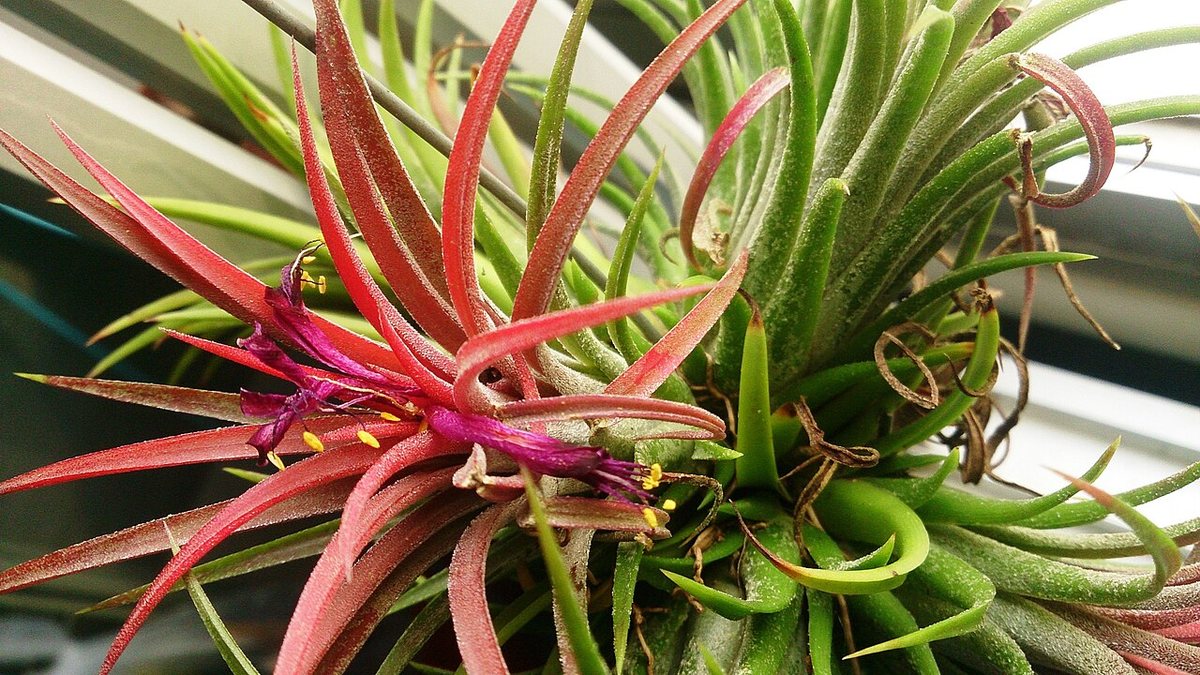

How do you care for an air plant?
Light: High light; most species tolerate full sun in nature. LED grow lights can supplement. Water: At least once a week. Many growers submerge the whole plant in water. It is not listed as toxic to cats and dogs.
About Air plant
Air plants (Tillandsia) are a genus of more than 600 epiphytic bromeliads that grow without soil. Their roots only anchor the plant; silvery scales on the leaves absorb water and nutrients. NC State Extension notes they need regular watering, at least once a week, and high light to flower, so the sunniest window in the home is not too much.
Air plant quick facts
- Botanical name
- Tillandsia
- Family
- Bromeliaceae (pineapple family)
- Native to
- Southern USA, Mexico and South America
- Light
- High light; most species tolerate full sun in nature. LED grow lights can supplement.
- Water
- At least once a week. Many growers submerge the whole plant in water.
- Growing medium
- No soil. Mount on wood, cork, shells or rocks, or set in a pot.
- Size
- T. ionantha, the most common species, grows 15–30 cm (6–12 in) tall.
- Propagation
- Offsets (pups); seed is very slow.
- Cats and dogs
- Not listed as toxic. NC State Extension lists no toxicity for Tillandsia. The ASPCA has no entry for air plants. Source: NC State Extension
Sources: NC State Extension: Tillandsia; NC State Extension: Tillandsia ionantha
Air Plant care at a glance
- Light
- Bright indirect. Wants bright, indirect light — sensitive to both extremes. Too much direct sun causes burns, too little causes stretching. Grow lights: Thrives under artificial grow lights (LED or fluorescent, 10-12 hours/day). A great option if your space lacks natural light.
- Watering
- Water when the top 1-2 inches of soil feel dry. Adjust with the seasons — less in winter, more in summer.
- Humidity
- Loves higher humidity (60%+). If your air is dry, group it with other plants, use a pebble tray, or run a humidifier nearby.
- Temperature
- Standard room temperature (60-80°F / 15-27°C) is perfect. Avoid cold drafts and sudden temperature swings.
- Soil
- Needs well-draining soil — add perlite or orchid bark to a standard potting mix. Good drainage is critical to prevent root rot.
- Pets
- NC State Extension lists no toxicity for Tillandsia. The ASPCA has no entry for air plants.
- Difficulty
- Intermediate
Common air plant problems, answered
Questions about Air plant
Is air plant toxic to cats and dogs?
NC State Extension lists no toxicity for Tillandsia. The ASPCA has no entry for air plants.
Get the Plant Mortality Checklist
Check moisture, roots and recent care changes before choosing a treatment. A practical checklist to keep.
Your checklist is ready!
We also sent it to your inbox. Check your email for the full download.
Open the ChecklistFree. No spam. Unsubscribe anytime.