Begonia maculata
Begonia maculata
Also known as: polka dot begonia, spotted begonia, trout begonia, Begonia argyrostigma
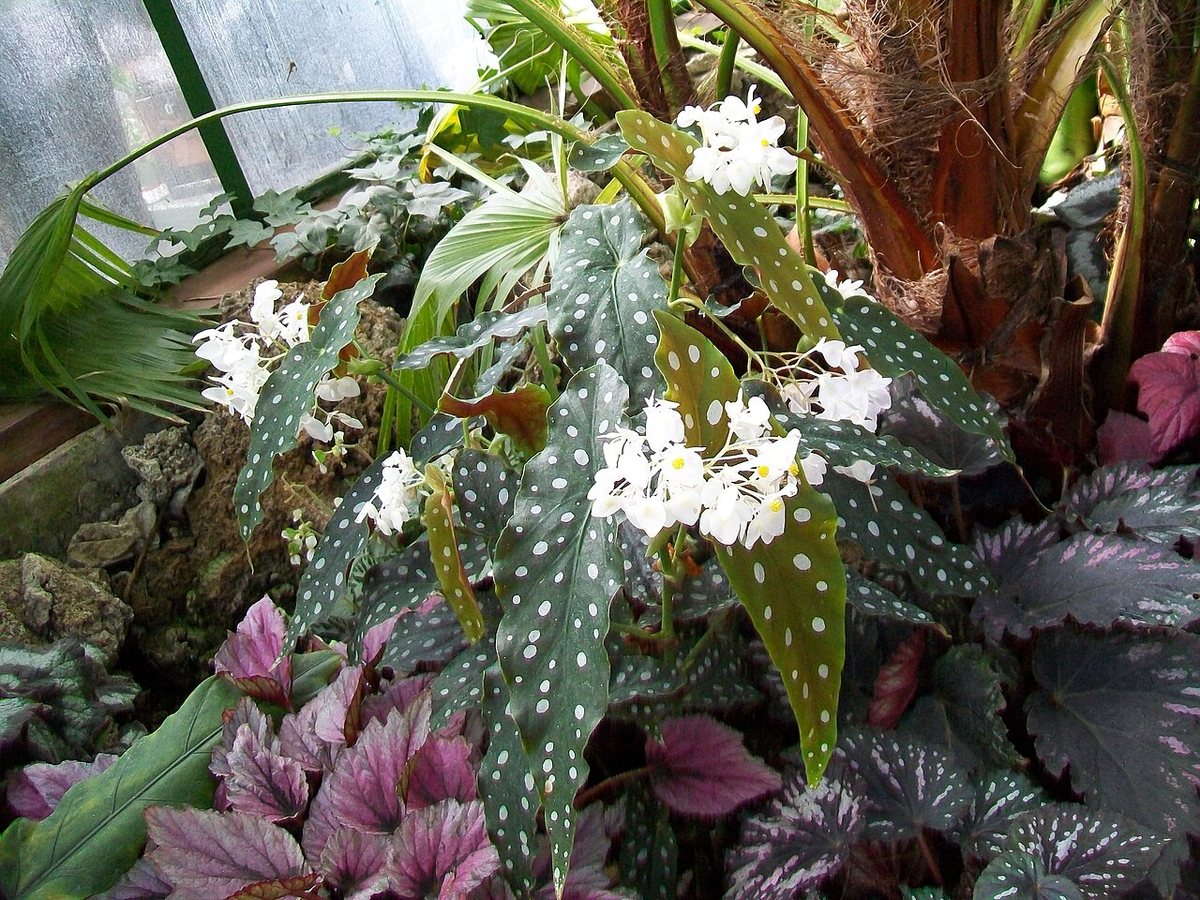

How do you care for a Begonia maculata?
Light: Partial shade or filtered light. The RHS notes it will not tolerate continuous direct sunlight. Water: Water moderately when in growth. Use a moist but well-drained, humus-rich mix; it will not tolerate waterlogging. It is toxic to cats and dogs, so keep it out of their reach.
About Begonia maculata
Begonia maculata, the polka dot begonia, is a cane-type begonia from Brazil with upright, bamboo-like stems and long, wavy leaves that are green with silvery-white spots above and red below. The RHS gives a height of 0.5–1 m (1.6–3.3 ft), and NC State Extension lists it at 60–90 cm (2–3 ft) with white to pink flowers. Both recommend partial shade or filtered light out of hot sun and a moist but well-drained mix; the RHS warns it will not tolerate waterlogging. It is toxic to cats and dogs.
Begonia maculata quick facts
- Botanical name
- Begonia maculata
- Family
- Begoniaceae (begonia family)
- Native to
- Brazil
- Light
- Partial shade or filtered light. The RHS notes it will not tolerate continuous direct sunlight.
- Water
- Water moderately when in growth. Use a moist but well-drained, humus-rich mix; it will not tolerate waterlogging.
- Temperature and humidity
- The RHS gives an optimum of about 19 °C (66 °F). NC State notes begonias do not tolerate temperatures below 13 °C (55 °F) and that cane types do best in high humidity.
- Size
- 0.5–1 m (1.6–3.3 ft) tall and up to 50 cm (20 in) wide.
- Pruning
- Pinch the tips to promote new growth. Cut overlong canes back to 2 or 3 buds in late spring.
- Propagation
- Stem cuttings.
- Cats and dogs
- Toxic. Toxic to dogs and cats. The ASPCA lists soluble calcium oxalates for Begonia species, causing vomiting and salivation; the underground parts are the most toxic. Source: ASPCA
Sources: NC State Extension: Begonia – Cane Types; RHS: Begonia maculata; NC State Extension: Begonia; ASPCA: Begonia
Begonia Maculata care at a glance
- Light
- Bright indirect. Wants bright, indirect light — sensitive to both extremes. Too much direct sun causes burns, too little causes stretching. Grow lights: Thrives under artificial grow lights (LED or fluorescent, 10-12 hours/day). A great option if your space lacks natural light.
- Watering
- Water when the top 1-2 inches of soil feel dry. Adjust with the seasons — less in winter, more in summer.
- Humidity
- Loves higher humidity (60%+). If your air is dry, group it with other plants, use a pebble tray, or run a humidifier nearby.
- Temperature
- Prefers moderate temperatures (60-80°F). Keep away from radiators and intense afternoon sun windows.
- Soil
- Needs well-draining soil — add perlite or orchid bark to a standard potting mix. Good drainage is critical to prevent root rot.
- Pets
- Toxic to dogs and cats. The ASPCA lists soluble calcium oxalates for Begonia species, causing vomiting and salivation; the underground parts are the most toxic.
- Difficulty
- Intermediate
Common Begonia maculata problems, answered
-
Begonia Maculata Propagation: Stem Cuttings in Water or Mix
Polka dot begonia is a cane begonia, and stem cuttings are the easiest way to propagate it. A 7.5–15 cm (3–6 in) tip cutting with at least two nodes roots in water or in moist mix.
-
Begonia Maculata Humidity: How Much, and How to Raise It
Polka dot begonias do best in humid air, but they also need moving air and dry leaves. Stagnant, damp conditions favour powdery mildew, grey mould and stem rot on cane begonias.
-
Begonia Maculata Watering: When to Water and How Much
Polka dot begonias want mix that stays evenly moist and dries only slightly between waterings. They do not tolerate waterlogged mix, and begonias are highly susceptible to root rot.
-
Begonia Maculata Dropping Leaves: Water, Light or Cold?
A polka dot begonia drops leaves after watering mistakes in either direction, a chill, a sudden move, a pot it has outgrown, or pests. Losing a few of the oldest lower leaves is also normal for cane begonias.
Questions about Begonia maculata
Is Begonia maculata toxic to cats and dogs?
Toxic to dogs and cats. The ASPCA lists soluble calcium oxalates for Begonia species, causing vomiting and salivation; the underground parts are the most toxic.
Get the Plant Mortality Checklist
Check moisture, roots and recent care changes before choosing a treatment. A practical checklist to keep.
Your checklist is ready!
We also sent it to your inbox. Check your email for the full download.
Open the ChecklistFree. No spam. Unsubscribe anytime.