Blueberry
Vaccinium
Also known as: highbush blueberry, half-high blueberry, rabbiteye blueberry, Vaccinium corymbosum
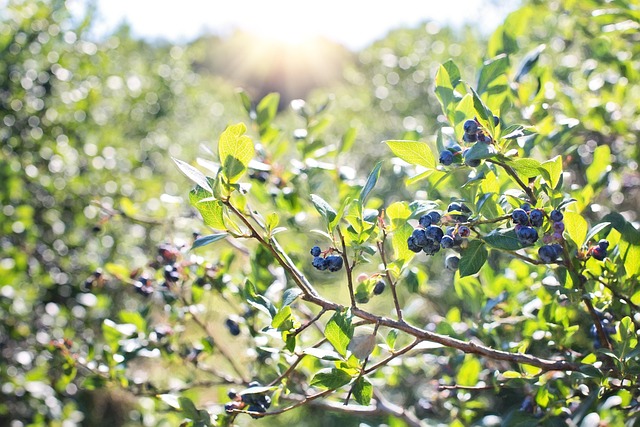
How do you care for a blueberry?
Light: Full sun. Plants tolerate partial shade, but yield and fruit quality may be lower. Clemson Extension advises full sun for container blueberries. Water: Roots are shallow and prone to drought injury. Keep the root zone evenly moist, but roots suffocate if waterlogged for more than a few days. It is not listed as toxic to cats and dogs.
About Blueberry
Blueberries are acid-loving shrubs in the heath family; highbush blueberry (Vaccinium corymbosum), native to eastern North America, grows 1.8–3.7 m (6–12 ft) tall in the ground. For containers, Oregon State University Extension recommends a 57–76 L (15–20 gal) pot or half a wine barrel for northern highbush and at least 38 L (10 gal) for half-high cultivars, which mature at 0.6–1.2 m (2–4 ft). The mix must drain well and stay acidic, at pH 4.5–5.5, so avoid potting soils with lime or a high proportion of compost. Grow two or more cultivars that bloom together: cross-pollination gives larger berries and higher yields.
Blueberry quick facts
- Botanical name
- Vaccinium
- Family
- Ericaceae (heath family)
- Native to
- Eastern North America (highbush blueberry)
- Light
- Full sun. Plants tolerate partial shade, but yield and fruit quality may be lower. Clemson Extension advises full sun for container blueberries.
- Container size
- 57–76 L (15–20 gal) or half a wine barrel for northern highbush; 38 L (10 gal) or larger for half-highs. The pot needs drainage holes.
- Potting mix
- 50–80% well-aged fine bark, 10–40% peat moss and about 10% perlite or pumice, at pH 4.5–5.5. No lime and little compost.
- Water
- Roots are shallow and prone to drought injury. Keep the root zone evenly moist, but roots suffocate if waterlogged for more than a few days.
- Pollination
- Plant at least two cultivars of the same type. Half-high and rabbiteye cultivars set little or no fruit on their own.
- Frost
- Open flowers are damaged at −2 °C (28 °F). Container plants can be moved indoors during a frost at bloom.
- Cats and dogs
- Not listed as toxic. The ASPCA has no entry for blueberry, and NC State Extension lists no toxicity for highbush blueberry, which is grown for its edible fruit. Source: NC State Extension
Sources: Oregon State University Extension: Growing Blueberries in Your Home Garden (EC 1304); Clemson Cooperative Extension HGIC: Blueberry (HGIC 1401); NC State Extension: Vaccinium corymbosum
Blueberry care at a glance
- Light
- Bright indirect. Prefers bright, indirect light. Keep out of harsh direct afternoon sun — it can scorch the leaves. Grow lights: Thrives under artificial grow lights (LED or fluorescent, 10-12 hours/day). A great option if your space lacks natural light.
- Watering
- Likes consistently moist (not soggy) soil. Water when the top inch feels dry. Don't let it dry out completely.
- Humidity
- Appreciates some humidity but adapts to average home conditions. Brown tips in winter? Your air might be too dry — a light misting helps.
- Temperature
- Prefers moderate temperatures (60-80°F). Keep away from radiators and intense afternoon sun windows.
- Soil
- Standard well-draining potting mix works well. Add perlite for extra drainage if you tend to overwater.
- Pets
- The ASPCA has no entry for blueberry, and NC State Extension lists no toxicity for highbush blueberry, which is grown for its edible fruit.
- Difficulty
- Beginner friendly
Common blueberry problems, answered
-
Root-Bound Blueberry in a Pot: Signs and How to Repot
A container blueberry is root-bound when tight, fibrous roots wrap the outside of the root ball and little loose mix is left. Blueberries have shallow, fine roots that dry out quickly, so a crowded pot shows up as fast drying, midsummer wilting and weak new growth.
-
Blueberry Poor Pollination: Small or Few Berries Explained
Small berries, few berries, or berries that ripen slowly and drop early usually mean too little compatible pollen reached the flowers. A single cultivar on a balcony, few bees during bloom, or cold wet weather at flowering are the common causes.
-
Blueberry Leaf Scorch: Drought, Fertilizer Burn or High pH?
Brown, crisp or blackened leaf edges on a blueberry usually point to drought stress or salt injury from too much fertilizer. Yellow leaves with green veins are a different problem: mix or soil pH that is too high.
Questions about Blueberry
Is blueberry toxic to cats and dogs?
The ASPCA has no entry for blueberry, and NC State Extension lists no toxicity for highbush blueberry, which is grown for its edible fruit.
Get the Plant Mortality Checklist
Check moisture, roots and recent care changes before choosing a treatment. A practical checklist to keep.
Your checklist is ready!
We also sent it to your inbox. Check your email for the full download.
Open the ChecklistFree. No spam. Unsubscribe anytime.