Christmas cactus
Schlumbergera
Also known as: holiday cactus, Thanksgiving cactus, Schlumbergera truncata, Schlumbergera bridgesii
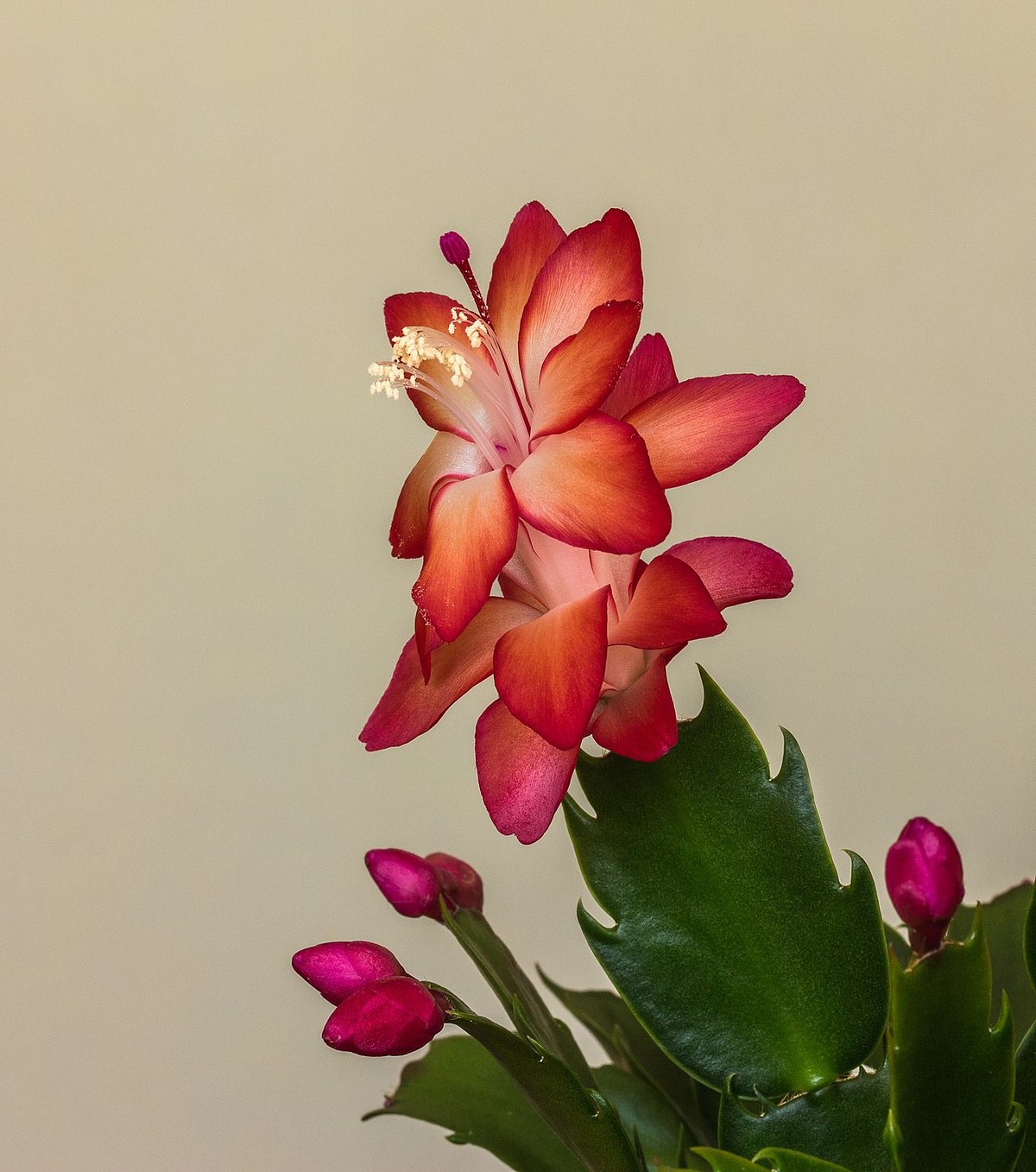

How do you care for a Christmas cactus?
Light: Bright, indirect light; intolerant of direct sun. Water: About every 1 to 2 weeks, when the soil is nearly dry. It is non-toxic to cats and dogs.
About Christmas cactus
Christmas and Thanksgiving cacti (Schlumbergera) are epiphytic cacti from the rainforests of southeastern Brazil, not desert plants. NC State Extension recommends bright, indirect light, a well-drained mix with sand or perlite, and watering every one to two weeks when the soil is nearly dry. To bloom they need uninterrupted nights of at least 13 hours from mid-September to mid-November. The ASPCA lists Christmas cactus as non-toxic to cats and dogs.
Christmas cactus quick facts
- Botanical name
- Schlumbergera
- Family
- Cactaceae (cactus family)
- Native to
- Coastal mountain rainforests of southeastern Brazil
- Light
- Bright, indirect light; intolerant of direct sun.
- Water
- About every 1 to 2 weeks, when the soil is nearly dry.
- Blooming
- Uninterrupted nights of at least 13 hours from mid-September to mid-November, with nights at 13–18 °C (55–65 °F). Artificial light at night is the usual reason a plant fails to bloom.
- Telling them apart
- Thanksgiving cactus (S. truncata) has pointed, claw-like projections on its stem segments; Christmas cactus has scalloped, rounded segments.
- Lifespan
- A single plant can live for over a hundred years.
- Propagation
- Stem or root cuttings.
- Cats and dogs
- Non-toxic. Non-toxic to dogs and cats, according to the ASPCA. Source: ASPCA
Sources: NC State Extension: Schlumbergera; NC State Extension: Schlumbergera truncata; ASPCA: Christmas Cactus
Christmas Cactus care at a glance
- Light
- Medium to bright indirect. Most comfortable in medium to bright indirect light. Avoid prolonged direct sun exposure. Grow lights: Thrives under artificial grow lights (LED or fluorescent, 10-12 hours/day). A great option if your space lacks natural light.
- Watering
- Water when the top 1-2 inches of soil feel dry. Adjust with the seasons — less in winter, more in summer.
- Humidity
- Appreciates some humidity but adapts to average home conditions. Brown tips in winter? Your air might be too dry — a light misting helps.
- Temperature
- Standard room temperature (60-80°F / 15-27°C) is perfect. Avoid cold drafts and sudden temperature swings.
- Soil
- Standard well-draining potting mix works well. Add perlite for extra drainage if you tend to overwater.
- Pets
- Non-toxic to dogs and cats, according to the ASPCA.
- Difficulty
- Moderate
Common Christmas cactus problems, answered
-
Christmas Cactus Not Blooming: Long Nights and Cool Temps
A Christmas cactus that won't bloom has usually missed its autumn cue: about six weeks of long, unbroken nights with cool temperatures. A lamp in the evening or a warm room is the most common reason buds never form.
-
Christmas Cactus Dropping Buds: Causes and How to Stop It
Christmas cactus buds usually drop after a sudden change: a move to a new room, a draft or heat source, a swing in temperature, or a pot that dried out or stayed soggy while buds were forming. A plant carrying a heavy set of buds may also shed some on its own.
-
Christmas Cactus Limp Leaves: Thirst or Root Rot?
Limp, wrinkled or shriveled Christmas cactus segments mean water isn't reaching the stems. That can be thirst, but extension guides say the more common cause is mix kept too wet, which kills the roots so they can no longer take up water.
Questions about Christmas cactus
Is Christmas cactus toxic to cats and dogs?
Non-toxic to dogs and cats, according to the ASPCA.
Get the Plant Mortality Checklist
Check moisture, roots and recent care changes before choosing a treatment. A practical checklist to keep.
Your checklist is ready!
We also sent it to your inbox. Check your email for the full download.
Open the ChecklistFree. No spam. Unsubscribe anytime.