Dracaena
Dracaena
Also known as: corn plant, cornstalk plant, dragon tree, Madagascar dragon tree, Janet Craig, song of India, Dracaena fragrans, Dracaena marginata
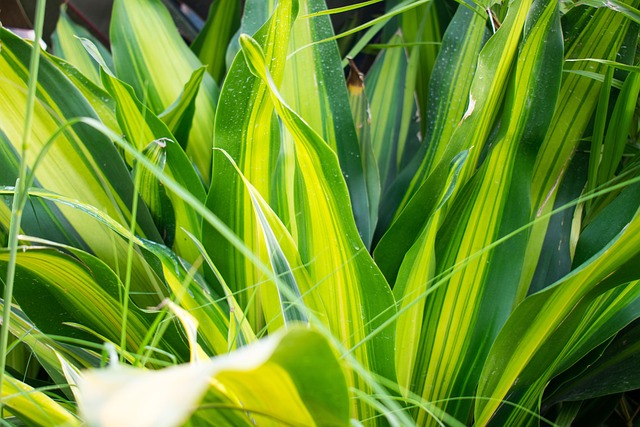
How do you care for a Dracaena?
Light: Bright, indirect light; many tolerate lower light. Direct sun can scorch the leaves, and corn plant leaves grow narrower if light is too low. Water: Let the top 2.5 cm (1 in) dry, then water thoroughly. Filtered water or rainwater avoids the fluoride, chlorine and salts that brown leaf tips; Clemson also advises soil pH 6.0–6.5 and avoiding high-perlite mixes and superphosphate fertilizer. It is toxic to cats and dogs, so keep it out of their reach.
About Dracaena
Dracaena is a genus of 198 species of tropical shrubs and trees in the asparagus family; the corn plant (D. fragrans) and the dragon tree (D. reflexa var. angustifolia, long sold as D. marginata) are the most common houseplants. NC State Extension now includes the snake plants, formerly Sansevieria, in Dracaena after genetic studies showed they belong there. Indoors most grow 0.6–3 m (2–10 ft) tall and want bright, indirect light, 16–24 °C (60–75 °F), and the top 2.5 cm (1 in) of mix to dry between waterings; fluoride and salts in tap water brown the leaf tips. The ASPCA lists dracaenas as toxic to cats and dogs.
Dracaena quick facts
- Botanical name
- Dracaena
- Family
- Asparagaceae (asparagus family)
- Native to
- Tropical and subtropical Africa, Southeast Asia, Australia, and Central and South America
- Light
- Bright, indirect light; many tolerate lower light. Direct sun can scorch the leaves, and corn plant leaves grow narrower if light is too low.
- Water
- Let the top 2.5 cm (1 in) dry, then water thoroughly. Filtered water or rainwater avoids the fluoride, chlorine and salts that brown leaf tips; Clemson also advises soil pH 6.0–6.5 and avoiding high-perlite mixes and superphosphate fertilizer.
- Temperature and humidity
- 16–24 °C (60–75 °F) with moderate to high humidity. Keep corn plants above 10 °C (50 °F).
- Size
- Indoors 0.6–3 m (2–10 ft) tall and 30–60 cm (1–2 ft) wide, depending on species. Dragon tree reaches about 1.8 m (6 ft) as a houseplant and can be pruned shorter.
- Common species
- D. fragrans (corn plant, including 'Massangeana', 'Janet Craig' and 'Warneckii'), D. reflexa var. angustifolia (Madagascar dragon tree), D. reflexa ('Song of India'), D. surculosa (gold dust dracaena), D. sanderiana (lucky bamboo) and D. trifasciata (snake plant).
- Propagation
- Stem cuttings, air layering or rooting basal shoots. Cut back bare stems and new leaves will sprout; pruned dragon tree stems usually grow two or more branches.
- Cats and dogs
- Toxic. The ASPCA lists Dracaena species, including corn plant, as toxic to dogs and cats. It names saponins, causing vomiting (sometimes with blood), depression, loss of appetite, drooling and, in cats, dilated pupils. NC State notes some species are also toxic to people and the sap can irritate skin. Source: ASPCA
Sources: NC State Extension: Dracaena; NC State Extension: Dracaena fragrans; NC State Extension: Dracaena reflexa var. angustifolia; Clemson Extension HGIC 1504: Dracaena; ASPCA: Dracaena
Dracaena guides
- Dracaena varieties: 13 types compared, from corn plant and Janet Craig to dragon tree, lucky bamboo and snake plant
- Dracaena vs Chinese evergreen: how to tell them apart, and how their care differs
- Large indoor plants: 18 tall floor plants by light level, size indoors and pet safety
- Low light houseplants: 12 plants for north windows and dim rooms, with pet safety
- Toxic houseplants for cats and dogs: what each one contains and the signs to watch for
Dracaena care at a glance
- Light
- Medium to bright indirect. Tolerates lower light but grows best in medium to bright indirect light. Can get leggy without enough light. Grow lights: Thrives under artificial grow lights (LED or fluorescent, 10-12 hours/day). A great option if your space lacks natural light.
- Watering
- Water when the top 1-2 inches of soil feel dry. Adjust with the seasons — less in winter, more in summer.
- Humidity
- Loves higher humidity (60%+). If your air is dry, group it with other plants, use a pebble tray, or run a humidifier nearby.
- Temperature
- Standard room temperature (60-80°F / 15-27°C) is perfect. Avoid cold drafts and sudden temperature swings.
- Soil
- Needs well-draining soil — add perlite or orchid bark to a standard potting mix. Good drainage is critical to prevent root rot.
- Pets
- The ASPCA lists Dracaena species, including corn plant, as toxic to dogs and cats. It names saponins, causing vomiting (sometimes with blood), depression, loss of appetite, drooling and, in cats, dilated pupils. NC State notes some species are also toxic to people and the sap can irritate skin.
- Difficulty
- Beginner friendly
Common Dracaena problems, answered
-
Dracaena Fluoride Toxicity: Confirm It and Stop Tip Burn
Dracaenas are sensitive to fluoride, which builds up from tap water and perlite and browns the leaf tips and margins. Fertilizer salts, uneven watering, softened water and dry air cause the same tip burn, so check those before blaming the water.
-
Leggy Dracaena: Why It Stretches and How to Cut It Back
A leggy Dracaena is usually normal aging made worse by low light. Cane dracaenas shed lower leaves as they grow, leaving a tuft on a bare stem, and dim light gives thinner, narrower growth. Cutting a cane back makes it resprout below the cut, and the top you remove can be rooted.
-
Dracaena Root Rot: Confirm It, Trim It, Save the Canes
Dracaena root rot follows a mix that stays wet: slow drainage, watering too often, or full watering through winter. Leaves yellow or drop and the cane may soften at the base, while the roots turn brown to black and mushy. Cold damage and normal lower-leaf drop can look similar, so check the roots.
-
Dracaena Marginata Brown Tips: Air, Fluoride, Salts or Water?
Brown tips on a Dracaena marginata come from four main causes: dry indoor air, fluoride in water or potting mix, salt build-up from heavy feeding, and watering that swings too wet or too dry. Clemson Extension names low humidity as the usual cause of dry tips and edges, but dracaenas are also very sensitive to fluoride.
Questions about Dracaena
Is Dracaena toxic to cats and dogs?
The ASPCA lists Dracaena species, including corn plant, as toxic to dogs and cats. It names saponins, causing vomiting (sometimes with blood), depression, loss of appetite, drooling and, in cats, dilated pupils. NC State notes some species are also toxic to people and the sap can irritate skin.
Get the Plant Mortality Checklist
Check moisture, roots and recent care changes before choosing a treatment. A practical checklist to keep.
Your checklist is ready!
We also sent it to your inbox. Check your email for the full download.
Open the ChecklistFree. No spam. Unsubscribe anytime.