Orchid
Phalaenopsis
Also known as: moth orchid, moon orchid, Phalaenopsis orchid
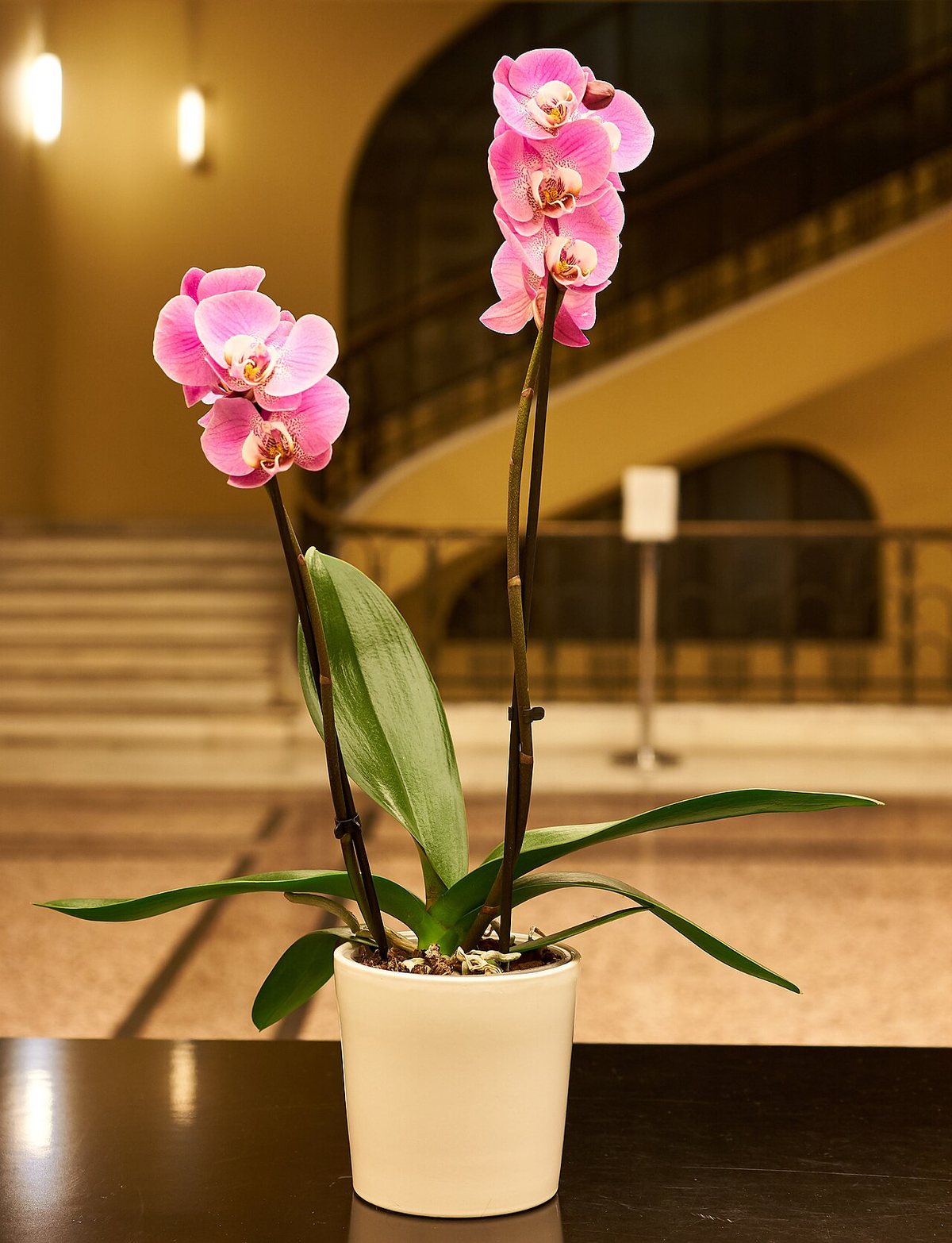

How do you care for an orchid?
Light: Bright, indirect light; an east window is best. Direct sun can harm the leaves, and low light is the most common reason plants do not rebloom. Water: Water in the morning with tepid water, let it drain completely and let the bark dry slightly between waterings. Mature plants usually need water about once a week, more often in summer heat. It is non-toxic to cats and dogs.
About Orchid
This is PlantGrail's general orchid hub, centred on the moth orchid (Phalaenopsis), which NC State Extension calls the most popular and widely available orchid sold as a houseplant; more than 34,000 hybrids are registered. Moth orchids are epiphytes from tropical and subtropical Asia and northeast Australia, so they are grown in a free-draining, bark-based mix rather than ordinary soil. They do best in bright, indirect light from an east window, with warm rooms, 40–60% humidity and water about once a week. The ASPCA lists Phalaenopsis as non-toxic to cats, dogs and horses.
Orchid quick facts
- Botanical name
- Phalaenopsis
- Family
- Orchidaceae (orchid family)
- Native to
- Tropical and subtropical Asia and northeast Australia (Phalaenopsis)
- Light
- Bright, indirect light; an east window is best. Direct sun can harm the leaves, and low light is the most common reason plants do not rebloom.
- Water
- Water in the morning with tepid water, let it drain completely and let the bark dry slightly between waterings. Mature plants usually need water about once a week, more often in summer heat.
- Temperature and humidity
- 21–27 °C (70–80 °F) by day and 16–21 °C (60–70 °F) at night, with 40–60% relative humidity. Avoid temperatures below 13 °C (55 °F).
- Reblooming
- Large-flowered white hybrids need about a week of 13 °C (55 °F) nights in autumn to start flower spikes; dwarf hybrids do not. Cut the spent spike just above the first node below the faded flowers.
- Size
- 46–61 cm (18–24 in) tall. Flowers are 8–15 cm (3–6 in) wide on large-flowered hybrids and 2.5–5 cm (1–2 in) on dwarf cultivars, and can last four months or more.
- Repotting
- About every two years into fresh bark-based orchid mix, after flowering or when new growth starts.
- Cats and dogs
- Non-toxic. The ASPCA lists Phalaenopsis orchids (moth orchid, moon orchid) as non-toxic to dogs, cats and horses. Other orchid genera are not covered by this entry. Source: ASPCA
Sources: NC State Extension: Phalaenopsis; Iowa State University Extension: What is the proper care for a moth orchid?; University of Maryland Extension: Care of Phalaenopsis Orchids (Moth Orchids); ASPCA: Phalaenopsis Orchid
Orchid care at a glance
- Light
- Bright indirect. Wants bright, indirect light — sensitive to both extremes. Too much direct sun causes burns, too little causes stretching. Grow lights: Thrives under artificial grow lights (LED or fluorescent, 10-12 hours/day). A great option if your space lacks natural light.
- Watering
- Let the soil dry out significantly between waterings — this plant is very sensitive to overwatering. When in doubt, wait another day.
- Humidity
- Loves higher humidity (60%+). If your air is dry, group it with other plants, use a pebble tray, or run a humidifier nearby.
- Temperature
- Sensitive to cold — keep above 55°F (13°C). Avoid placing near drafty windows or exterior doors in winter.
- Soil
- Needs well-draining soil — add perlite or orchid bark to a standard potting mix. Good drainage is critical to prevent root rot.
- Pets
- The ASPCA lists Phalaenopsis orchids (moth orchid, moon orchid) as non-toxic to dogs, cats and horses. Other orchid genera are not covered by this entry.
- Difficulty
- Moderate
Common orchid problems, answered
-
Orchid Wrinkled Leaves: A Root-First Diagnosis
Wrinkled or leathery orchid leaves mean too little water is reaching the leaf tissue. NC State Extension gives two causes: the potting medium is kept too dry, or the roots are damaged, often rotted by a soggy medium. Root condition tells you which.
-
Mold on Orchid Soil: Identify the Growth and Treat the Cause
White or gray growth on orchid media may be harmless saprophytic fungus, but persistent moisture, decomposed media, and soft or decaying roots point to conditions that can support root rot.
-
Phalaenopsis in Moss vs Bark: Which Potting Medium?
Both sphagnum moss and bark can grow a moth orchid, but they behave differently. Moss holds far more water and can rot roots if kept constantly wet. Bark drains freely and lets air reach the roots, which is why extension guides favour it for long-term growing.
-
How to Get a Phalaenopsis Orchid to Rebloom
A moth orchid reblooms when it is healthy, has stored enough energy from good light, and gets its flowering cue. For most large-flowered Phalaenopsis that cue is cooler autumn nights, with nights falling into the 10–16 °C (50s–60s °F) range.
-
Orchid Bud Blast: Why Buds Shrivel and Drop
Bud blast is when orchid buds shrivel, yellow and drop before opening on an otherwise healthy plant. The usual triggers are a change in location, drafts or sudden temperature swings, ethylene from ripening fruit or gas appliances, and watering that is too much or too little.
-
Mealybugs on Orchids: Find Hidden Colonies and Treat Them
White, cottony tufts in the leaf joints, under leaves, on flower spikes or in the potting media, with sticky honeydew nearby, point to mealybugs. They hide in crevices and new growth, so one visible colony usually means more you cannot see yet.
-
Orchid Root Rot: Spot It, Trim It, and Which Remedies Help
Moth orchid roots rot when they are watered too often or when the bark or moss around them breaks down and stays wet. Rotted roots are brown to black and soft, while healthy roots are light in colour. Silvery aerial roots growing out of the pot are normal and turn green when wet.
-
Orchid Brown Spots: Bacterial Spot, Sunburn or Cold? Peroxide?
Soft, water-soaked brown or black spots on a moth orchid leaf are usually bacterial brown spot, the most common Phalaenopsis disease. Spots that appear suddenly on the highest, sunniest part of the leaf are sunburn, and sunken, pitted patches after a chill are cold damage. Hydrogen peroxide appears in American Orchid Society advice for bacterial spots, not for burns.
Related articles
Questions about Orchid
Is orchid toxic to cats and dogs?
The ASPCA lists Phalaenopsis orchids (moth orchid, moon orchid) as non-toxic to dogs, cats and horses. Other orchid genera are not covered by this entry.
Get the Plant Mortality Checklist
Check moisture, roots and recent care changes before choosing a treatment. A practical checklist to keep.
Your checklist is ready!
We also sent it to your inbox. Check your email for the full download.
Open the ChecklistFree. No spam. Unsubscribe anytime.