Oxalis triangularis
Oxalis triangularis, formerly Oxalis regnellii
Also known as: purple shamrock, false shamrock, purple wood sorrel, love plant, shamrock plant
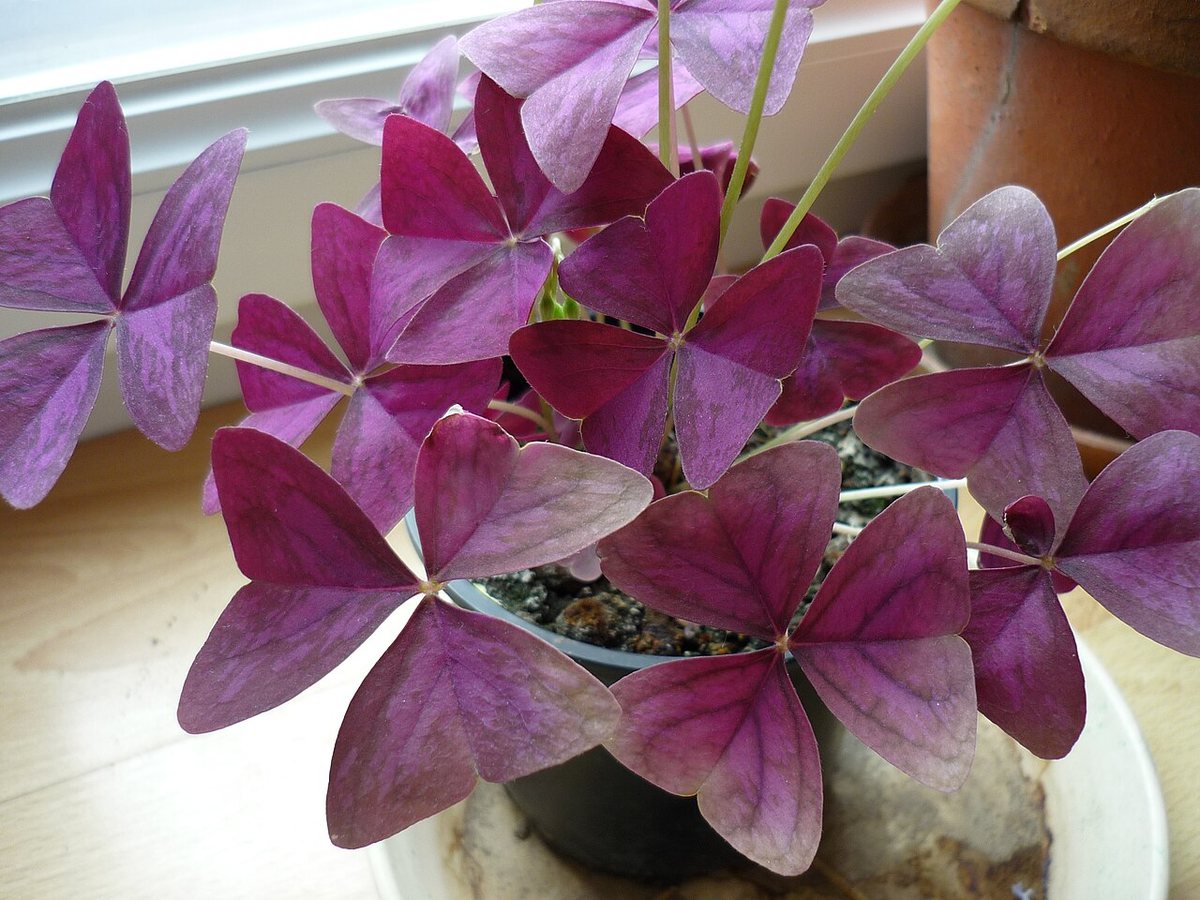

How do you care for an Oxalis triangularis?
Light: Bright, indirect light or a bright sunny window. NC State lists full sun to partial shade. Water: Keep barely moist and let the surface dry between waterings. Overwatering can lead to root rot. It is toxic to cats and dogs, so keep it out of their reach.
About Oxalis triangularis
Oxalis triangularis, the purple shamrock, is a South American wood sorrel that grows from scaly underground rhizomes and is the species most often sold as a shamrock houseplant. Its three triangular leaflets, deep purple to green, fold up at night, as do its small white to pale pink flowers. NC State, Penn State and Iowa State Extension recommend bright light, cool nights and a well-drained mix that dries slightly at the surface, and expect a rest period: when the leaves die back, stop watering and wait for new growth. The ASPCA lists Oxalis species as toxic to cats, dogs and horses because of soluble calcium oxalates.
Oxalis triangularis quick facts
- Botanical name
- Oxalis triangularis, formerly Oxalis regnellii
- Family
- Oxalidaceae (wood sorrel family)
- Native to
- South America (Brazil and Paraguay)
- Light
- Bright, indirect light or a bright sunny window. NC State lists full sun to partial shade.
- Water
- Keep barely moist and let the surface dry between waterings. Overwatering can lead to root rot.
- Temperature
- Cool: Iowa State suggests nights around 16 °C (60 °F) and days around 21 °C (70 °F); UW–Madison says no more than 24 °C (75 °F) by day.
- Dormancy
- Leaves yellow and die back when it rests, often in late-summer heat or in autumn. Stop watering, keep it cool and dark, and resume when new shoots appear. Iowa State gives 1 to 3 months; UW–Madison about a month for purple-leaved types.
- Size
- 15–46 cm (6–18 in) tall and 30–61 cm (1–2 ft) wide.
- Propagation
- Divide the rhizomes, most easily while the plant is dormant.
- Cats and dogs
- Toxic. The ASPCA lists shamrock plant (Oxalis species) as toxic to dogs, cats and horses because of soluble calcium oxalates; signs include salivation and tremors, and kidney failure is rare in dogs and cats. NC State notes serious effects are usually limited to eating large quantities. Source: ASPCA
Sources: NC State Extension: Oxalis triangularis; Penn State Extension: The Botany Behind the Shamrock; Iowa State University Extension: Growing Shamrocks Indoors; University of Wisconsin–Madison Extension: Shamrocks, Oxalis spp.; Missouri Botanical Garden: Oxalis triangularis; ASPCA: Shamrock Plant
Oxalis Triangularis care at a glance
- Light
- Bright indirect. Wants bright, indirect light — sensitive to both extremes. Too much direct sun causes burns, too little causes stretching. Grow lights: Thrives under artificial grow lights (LED or fluorescent, 10-12 hours/day). A great option if your space lacks natural light.
- Watering
- Let the soil dry out significantly between waterings — this plant is very sensitive to overwatering. When in doubt, wait another day.
- Humidity
- Appreciates some humidity but adapts to average home conditions. Brown tips in winter? Your air might be too dry — a light misting helps.
- Temperature
- Standard room temperature (60-80°F / 15-27°C) is perfect. Avoid cold drafts and sudden temperature swings.
- Soil
- Standard well-draining potting mix works well. Add perlite for extra drainage if you tend to overwater.
- Pets
- The ASPCA lists shamrock plant (Oxalis species) as toxic to dogs, cats and horses because of soluble calcium oxalates; signs include salivation and tremors, and kidney failure is rare in dogs and cats. NC State notes serious effects are usually limited to eating large quantities.
- Difficulty
- Beginner friendly
Common Oxalis triangularis problems, answered
-
Purple Shamrock Dormancy: Dying Back, Resting and Regrowth
A purple shamrock whose leaves yellow, flop and die back after months of growth is usually going dormant, not dying. It grows from fleshy underground rhizomes that rest for a while, often after heat or dryness in summer or as nights lengthen in autumn, then send up new leaves.
-
Leggy Purple Shamrock: Light, Leaf Movement and Fixes
Long, floppy leaf stalks on a purple shamrock usually mean the plant is not getting enough light. Too much fertilizer can add to the stretch. Leaves that fold at night or on dull days are normal and not a sign of legginess on their own.
-
Purple Shamrock Drooping: Night Folding, Water or Dormancy?
Purple shamrock leaves fold down every night and on dull days, which is normal. Drooping that lasts through a bright day points to dry mix, waterlogged and rotting roots, or a plant starting to go dormant.
Questions about Oxalis triangularis
Is Oxalis triangularis toxic to cats and dogs?
The ASPCA lists shamrock plant (Oxalis species) as toxic to dogs, cats and horses because of soluble calcium oxalates; signs include salivation and tremors, and kidney failure is rare in dogs and cats. NC State notes serious effects are usually limited to eating large quantities.
Get the Plant Mortality Checklist
Check moisture, roots and recent care changes before choosing a treatment. A practical checklist to keep.
Your checklist is ready!
We also sent it to your inbox. Check your email for the full download.
Open the ChecklistFree. No spam. Unsubscribe anytime.