Parlor palm
Chamaedorea elegans
Also known as: parlour palm, neanthe bella palm, good luck palm, reed palm, Neanthe bella, Collinia elegans
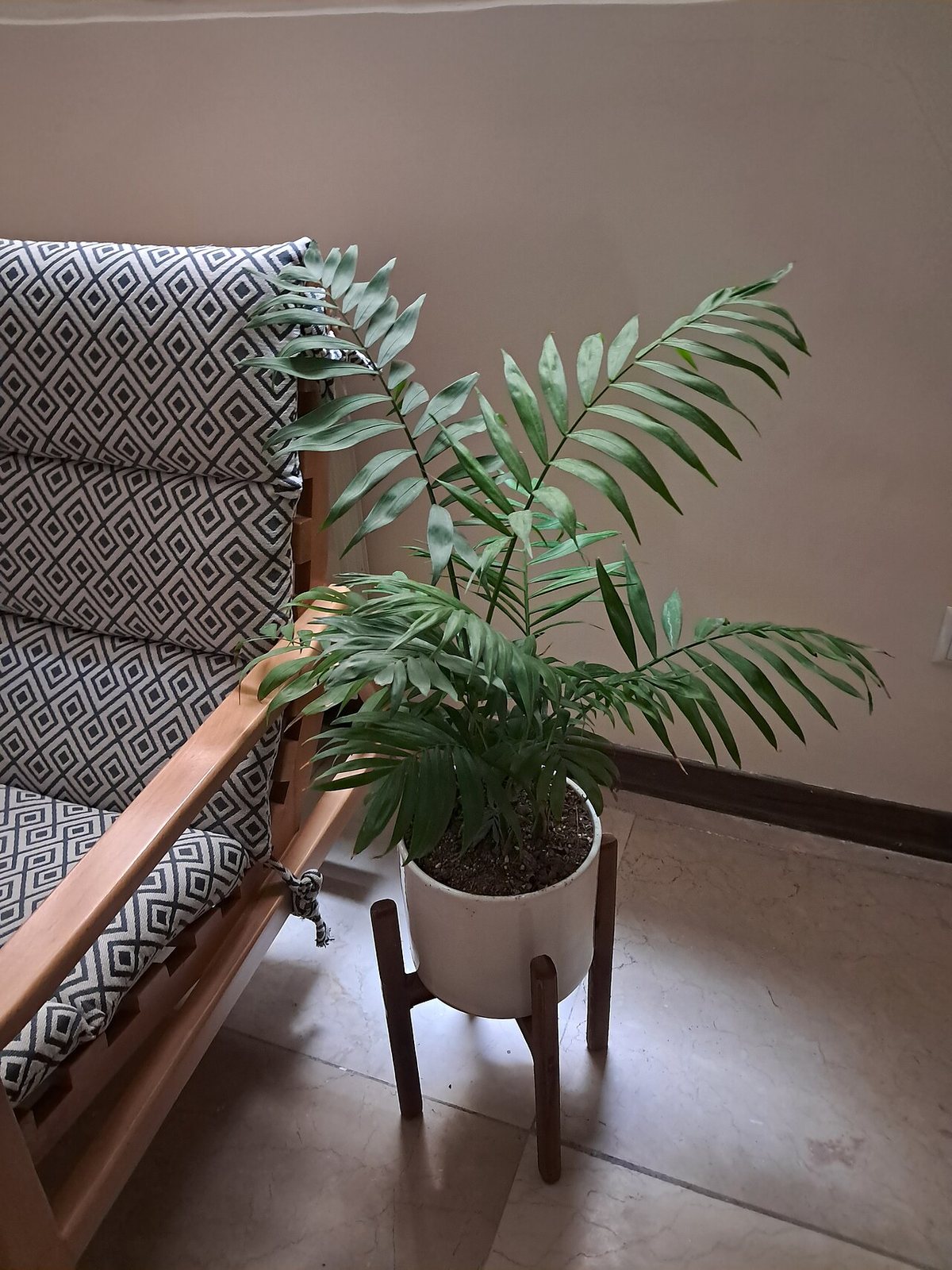

How do you care for a parlor palm?
Light: Bright, indirect light, ideally near a north- or east-facing window. Tolerates low light. Water: Let the soil dry slightly between waterings, in a well-drained, humus-rich mix. It tolerates short dry spells but grows more lushly in moist soil; overwatering is the usual problem. It is non-toxic to cats and dogs.
About Parlor palm
Parlor palm (Chamaedorea elegans) is a small, single-stemmed understory palm from southern Mexico and northern Central America, and one of the most sought-after indoor palms. Growers often put three or more plants in one pot for a fuller look; indoors the stems can reach 1.5 m (5 ft) but usually stay smaller. NC State Extension recommends bright, indirect light from a north- or east-facing window, though it tolerates low light, and letting the soil dry slightly between waterings; Clemson Extension advises a winter minimum of 16 °C (60 °F). The ASPCA lists parlor palm as non-toxic to cats and dogs.
Parlor palm quick facts
- Botanical name
- Chamaedorea elegans
- Family
- Arecaceae (palm family)
- Native to
- Southern Mexico to Honduras
- Light
- Bright, indirect light, ideally near a north- or east-facing window. Tolerates low light.
- Water
- Let the soil dry slightly between waterings, in a well-drained, humus-rich mix. It tolerates short dry spells but grows more lushly in moist soil; overwatering is the usual problem.
- Temperature and humidity
- At least 16 °C (60 °F) in winter, away from cold drafts. NC State says low to medium humidity suits it; Clemson says Chamaedorea palms prefer moderate to high humidity but adapt.
- Feeding and repotting
- Feed during the growing season and not in winter. Repot only when needed, usually every other year.
- Size
- Stems up to 1.5 m (5 ft) indoors, usually less; 1.8–2.1 m (6–7 ft) tall with a 0.9 m (3 ft) leaf spread outdoors in warm climates. Palms cannot be cut back to reduce their height.
- Pests
- Spider mites and mealybugs; wiping the leaves with a damp cloth helps. Clemson warns against leaf-shine products on palms.
- Cats and dogs
- Non-toxic. The ASPCA lists parlor palm (Chamaedorea elegans) as non-toxic to dogs and cats. NC State notes that juice from the fruit can irritate skin, though indoor plants rarely fruit. Source: ASPCA
Sources: NC State Extension: Chamaedorea elegans; Clemson Extension HGIC 1508: Indoor Palms; ASPCA: Parlor Palm
Parlor palm guides
- Indoor palm types: parlor, bamboo, kentia, areca and lady palms compared, plus ponytail and sago
- Pet-safe houseplants by light: plants the ASPCA lists as non-toxic to cats and dogs
- Low light houseplants: 12 plants for north windows and dim rooms, with pet safety
- Bedroom plants: how to choose for your light, space and pets (13 options compared)
Parlor Palm care at a glance
- Light
- Bright indirect. Wants bright, indirect light — sensitive to both extremes. Too much direct sun causes burns, too little causes stretching. Grow lights: Thrives under artificial grow lights (LED or fluorescent, 10-12 hours/day). A great option if your space lacks natural light.
- Watering
- Water when the top 1-2 inches of soil feel dry. Adjust with the seasons — less in winter, more in summer.
- Humidity
- Loves higher humidity (60%+). If your air is dry, group it with other plants, use a pebble tray, or run a humidifier nearby.
- Temperature
- Sensitive to cold — keep above 55°F (13°C). Avoid placing near drafty windows or exterior doors in winter.
- Soil
- Needs well-draining soil — add perlite or orchid bark to a standard potting mix. Good drainage is critical to prevent root rot.
- Pets
- The ASPCA lists parlor palm (Chamaedorea elegans) as non-toxic to dogs and cats. NC State notes that juice from the fruit can irritate skin, though indoor plants rarely fruit.
- Difficulty
- Moderate
Common parlor palm problems, answered
-
Parlor Palm Spider Mites: Confirm and Control an Infestation
Spider mites are supported by pale stippling, bronzing, moving specks on a white-paper test, and fine webbing in heavier infestations. Brown palm foliage without these signs may instead reflect water, root, salt, or humidity stress.
-
Parlor Palm Yellow Leaves: Water, Mites, Cold or Old Fronds?
A parlor palm that turns yellow is most often sitting in mix that stays too wet, or has been left to dry out. Spider mites, cold drafts and too much or too little feeding also yellow the fronds. One old lower frond fading, or one stem dying in a crowded pot, can be normal.
-
Brown Spots on Parlor Palm: Leaf Spot, Cold or Fertilizer?
Small round brown spots with tan centres and darker edges on a young parlor palm usually mean a fungal leaf spot, which young palms are most prone to. Reddish-brown dead patches after a cold spell, oval spots with yellow halos after heavy feeding, and fine pale stippling from mites look different and need different fixes.
-
Parlor Palm Crispy Leaves and Brown Tips: What to Check
Crispy brown tips on a parlor palm usually mean the leaflets are losing water faster than the roots can supply it: a mix that dried out, dry heated air, or roots damaged by salts, fluoride or too much fertilizer. Whole stems browning in a crowded pot can also be seedlings being out-competed.
-
Parlor Palm Drooping: Thirst, Wet Roots, Crowding or Cold?
A drooping parlor palm is usually short of water in its fronds: the mix has dried out, or roots kept too wet have rotted. One stem flopping in a crowded pot is often that stem being out-competed. Cold drafts, a pot packed solid with roots, and rough repotting are the other suspects.
Questions about Parlor palm
Is parlor palm toxic to cats and dogs?
The ASPCA lists parlor palm (Chamaedorea elegans) as non-toxic to dogs and cats. NC State notes that juice from the fruit can irritate skin, though indoor plants rarely fruit.
Get the Plant Mortality Checklist
Check moisture, roots and recent care changes before choosing a treatment. A practical checklist to keep.
Your checklist is ready!
We also sent it to your inbox. Check your email for the full download.
Open the ChecklistFree. No spam. Unsubscribe anytime.