Chinese money plant
Pilea peperomioides
Also known as: Chinese money plant, pancake plant, UFO plant, coin plant, missionary plant, money plant
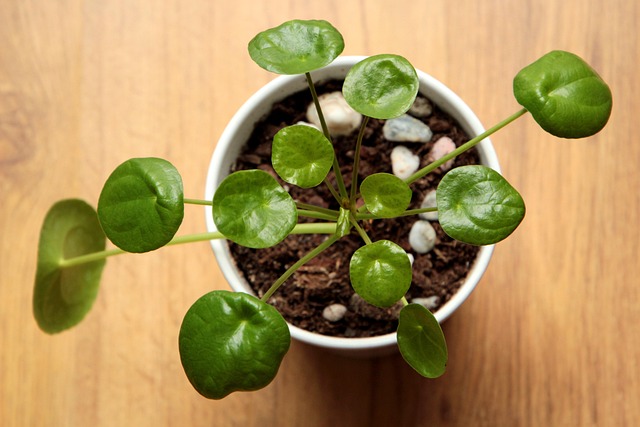
How do you care for a Chinese money plant?
Light: Bright, indirect light. Water: Moist, well-drained potting mix. It is non-toxic to cats and dogs.
About Chinese money plant
Chinese money plant (Pilea peperomioides) is a compact houseplant from the shady mountains of Yunnan, China, with round leaves attached at their centres like lily pads. It grows 20–30 cm (8–12 in) tall and wide. NC State Extension recommends bright, indirect light and a moist, well-drained mix, away from cold drafts and heat sources, and describes it as safe for pets and children.
Chinese money plant quick facts
- Botanical name
- Pilea peperomioides
- Family
- Urticaceae (nettle family)
- Native to
- Yunnan Province, southern China
- Light
- Bright, indirect light.
- Water
- Moist, well-drained potting mix.
- Humidity
- Moderate to high, but tolerates average home humidity. Avoid cold drafts and heat sources.
- Size
- 20–30 cm (8–12 in) tall and wide; leaves about 10 cm (4 in) across.
- Propagation
- Offsets (pups) or stem cuttings, best in spring or early summer.
- Cats and dogs
- Non-toxic. NC State Extension describes Chinese money plant as safe for pets and children. The ASPCA has no entry for this species. Source: NC State Extension
Sources: NC State Extension: Pilea peperomioides; RHS: How to grow pilea
Pilea Peperomioides care at a glance
- Light
- Bright indirect. Wants bright, indirect light — sensitive to both extremes. Too much direct sun causes burns, too little causes stretching. Grow lights: Thrives under artificial grow lights (LED or fluorescent, 10-12 hours/day). A great option if your space lacks natural light.
- Watering
- Water when the top 1-2 inches of soil feel dry. Adjust with the seasons — less in winter, more in summer.
- Humidity
- Loves higher humidity (60%+). If your air is dry, group it with other plants, use a pebble tray, or run a humidifier nearby.
- Temperature
- Sensitive to cold — keep above 55°F (13°C). Avoid placing near drafty windows or exterior doors in winter.
- Soil
- Needs well-draining soil — add perlite or orchid bark to a standard potting mix. Good drainage is critical to prevent root rot.
- Pets
- NC State Extension describes Chinese money plant as safe for pets and children. The ASPCA has no entry for this species.
- Difficulty
- Beginner friendly
Common Chinese money plant problems, answered
-
Pilea Leaves Falling Off: Normal Shedding or Stress?
A Chinese money plant that sheds a few old leaves from the bottom of the stem is aging normally. Many leaves dropping at once points to a recent change in conditions, cold or drafts, a pot that is too wet or too dry, or pests.
-
Pilea Yellow Leaves With Brown Spots: Water, Disease or Sun?
Yellow leaves on a Chinese money plant usually start in the pot: mix kept too wet, or roots rotting in an oversized pot. Yellow leaves with brown spots add a second clue. Spots with a yellow halo point to leaf spot disease, often after wet foliage, while dry brown or red-brown patches point to sun or cold.
-
Overwatered Pilea Peperomioides: Signs and What to Do
An overwatered Pilea peperomioides droops, curls or yellows while its mix is still damp and the pot feels heavy. Leaves may drop, stems can go soft at the base, and fungus gnats or a sour smell often follow. A thirsty pilea droops too, but in dry, light mix, and it perks up after a drink.
-
Pilea Leaves Curling, Doming or Cupping: Water or Light?
The RHS links curling or puckering pilea leaves to poor growing conditions: too little water, too much water, or not enough light. Domed and cupped leaves are descriptions of the shape, not separate diseases. The mix, the light and the leaf undersides tell you which cause applies.
Questions about Chinese money plant
Is Chinese money plant toxic to cats and dogs?
NC State Extension describes Chinese money plant as safe for pets and children. The ASPCA has no entry for this species.
Get the Plant Mortality Checklist
Check moisture, roots and recent care changes before choosing a treatment. A practical checklist to keep.
Your checklist is ready!
We also sent it to your inbox. Check your email for the full download.
Open the ChecklistFree. No spam. Unsubscribe anytime.