Rubber plant
Ficus elastica
Also known as: Indian rubber plant, India rubber fig, India rubber tree
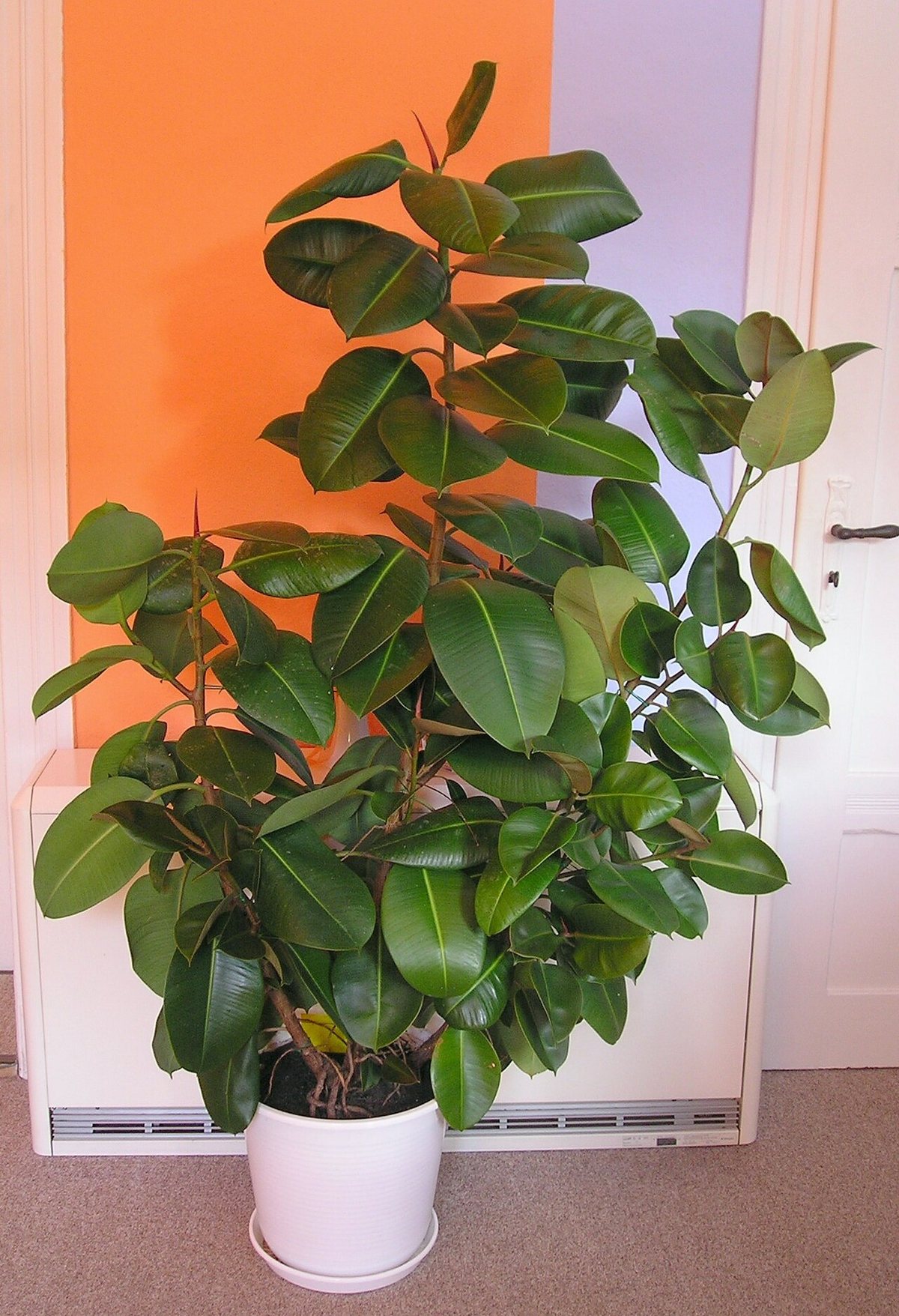

How do you care for a rubber plant?
Light: Bright, indirect light or partial shade, protected from afternoon sun. Clemson Extension says it adapts to low light but grows best with morning light from an east window. Water: Water thoroughly, then let the surface dry slightly. Water less from autumn to late winter. Soil that stays wet causes leaf yellowing and root rot. It is toxic to cats and dogs, so keep it out of their reach.
About Rubber plant
Rubber plant (Ficus elastica) is an evergreen fig from Nepal to China and western Malesia that can reach 30 m (100 ft) in the wild but is usually kept to 0.6–3 m (2–10 ft) indoors. It is grown for stiff, glossy leaves up to 43 cm (17 in) long, in dark green, burgundy or variegated cultivars. NC State Extension recommends bright, indirect light or partial shade with protection from afternoon sun, regular watering without overwatering, less water from autumn to late winter, and temperatures above 13 °C (55 °F). It is toxic to cats and dogs.
Rubber plant quick facts
- Botanical name
- Ficus elastica
- Family
- Moraceae (mulberry family)
- Native to
- Southeast Asia, from Nepal to China and western Malesia
- Light
- Bright, indirect light or partial shade, protected from afternoon sun. Clemson Extension says it adapts to low light but grows best with morning light from an east window.
- Water
- Water thoroughly, then let the surface dry slightly. Water less from autumn to late winter. Soil that stays wet causes leaf yellowing and root rot.
- Temperature
- 24–27 °C (75–80 °F) by day and 16–18 °C (60–65 °F) at night. Avoid temperatures below 13 °C (55 °F), sudden drops and cold drafts, which can cause leaf loss.
- Size
- Usually 0.6–3 m (2–10 ft) indoors; leaves up to 43 cm (17 in) long. Prune in spring for a bushier plant, or stake a tall one.
- Cultivars
- 'Robusta' (deep green), 'Burgundy', 'Decora', 'Tineke' (green and cream) and 'Tricolor' (green, cream and pink).
- Propagation
- Stem or tip cuttings, or air layering.
- Cats and dogs
- Toxic. NC State Extension lists rubber plant as a problem for cats, dogs and horses, and Clemson Extension notes the sticky white sap can irritate skin or the stomach. The ASPCA has no separate Ficus elastica entry; its Indian rubber plant page covers weeping fig (Ficus benjamina), which it lists as toxic to dogs and cats. Source: NC State Extension
Sources: NC State Extension: Ficus elastica; Clemson Extension HGIC: Rubber Plant (HGIC 1510); ASPCA: Indian Rubber Plant (Ficus benjamina)
Rubber Plant care at a glance
- Light
- Bright indirect. Wants bright, indirect light — sensitive to both extremes. Too much direct sun causes burns, too little causes stretching. Grow lights: Thrives under artificial grow lights (LED or fluorescent, 10-12 hours/day). A great option if your space lacks natural light.
- Watering
- Let the soil dry out significantly between waterings — this plant is very sensitive to overwatering. When in doubt, wait another day.
- Humidity
- Loves higher humidity (60%+). If your air is dry, group it with other plants, use a pebble tray, or run a humidifier nearby.
- Temperature
- Sensitive to cold — keep above 55°F (13°C). Avoid placing near drafty windows or exterior doors in winter.
- Soil
- Needs well-draining soil — add perlite or orchid bark to a standard potting mix. Good drainage is critical to prevent root rot.
- Pets
- NC State Extension lists rubber plant as a problem for cats, dogs and horses, and Clemson Extension notes the sticky white sap can irritate skin or the stomach. The ASPCA has no separate Ficus elastica entry; its Indian rubber plant page covers weeping fig (Ficus benjamina), which it lists as toxic to dogs and cats.
- Difficulty
- Moderate
Common rubber plant problems, answered
-
Rubber Plant Edema: Diagnose Soft Brown Spots and Fix Watering
Blister-like spots on rubber plant leaves that dry into tan, corky scabs can be edema. This noninfectious disorder happens when the roots take up water faster than the leaves can lose it. Wet mix combined with low light, cool air or high humidity is the usual trigger.
-
Rubber Plant Brown Spots: Water, Cold, Sun, Edema or Disease
Brown spots on a rubber plant come from five main causes: watering problems and salt build-up, cold, sun scorch, edema, or leaf spot disease. Where the spots are and what they feel like usually tells you which.
-
Overwatered Rubber Plant: Signs, Root Check and Recovery
An overwatered rubber plant usually shows yellowing leaves, leaf drop or wilting while the mix is still wet. Mix that drains slowly or frequent watering can lead to root rot.
-
Rubber Plant Fungal Infection: Anthracnose and Leaf Spot
Fungal leaf disease is uncommon on rubber plants indoors, but anthracnose, Myrothecium leaf spot and Botrytis blight do occur on Ficus elastica. Wet leaves, wounds and humid, still air favour them; cold injury and bacterial spots can look similar.
-
Rubber Plant Root Rot: Check Roots, Trim, Repot or Take Cuttings
Rubber plant root rot is caused by water molds and fungi such as Pythium, Phytophthora and Rhizoctonia, which take hold in mix that stays wet. Leaves yellow, wilt and drop, and the roots turn brown to black and soft. A plant with plenty of firm, pale roots left can be trimmed and repotted; one with a rotting stem base is better saved as cuttings.
-
Rubber Plant Leaves Curling: Water, Cold, Dry Air or Thrips?
Rubber plant leaves usually curl because they are short of water: either the mix has dried out, or wet, rotting roots cannot supply it. Cold and draughts, hot dry air with salt build-up, and thrips feeding on young leaves are the other causes. Where the curl appears, old leaves or new ones, helps sort them.
-
Rubber Plant Sunburn: Signs, Causes and How to Fix It
Rubber plant sunburn shows as pale, bleached or faded patches on the leaves that face the light, which later turn brown and brittle. It usually follows a jump in light, such as a move outdoors, into a sunnier window or into afternoon sun.
-
Leggy Rubber Plant: Fix the Light, Prune or Air Layer
A rubber plant that grows tall and bare, with wide gaps between leaves, is usually short on light, sometimes pushed by heavy feeding. The bare stem will not refill, so the fix is brighter light plus a spring cut, or an air layer that turns the leafy top into a new plant.
-
Can Spider Mites Kill a Rubber Plant? Signs and Treatment
Yes, if they are left unchecked. Spider mites stipple rubber plant leaves with pale flecks, then turn them yellow or bronze until they drop, and Clemson Extension says an unchecked infestation can kill the plant. Colorado State Extension says repeated washing over several weeks should bring numbers down to low levels.
-
Rubber Plant Brown Tips: Salts, Watering, Dry Air or Feeding?
Brown tips on rubber plant leaves usually point to the root zone: salt build-up from fertilizer or water, or a mix that swings between bone dry and soggy. Hot, dry air and strong sun can also dry leaf tips. Browning along the edges of old leaves, with yellowing, can be a feeding problem rather than a watering one.
Questions about Rubber plant
Is rubber plant toxic to cats and dogs?
NC State Extension lists rubber plant as a problem for cats, dogs and horses, and Clemson Extension notes the sticky white sap can irritate skin or the stomach. The ASPCA has no separate Ficus elastica entry; its Indian rubber plant page covers weeping fig (Ficus benjamina), which it lists as toxic to dogs and cats.
Get the Plant Mortality Checklist
Check moisture, roots and recent care changes before choosing a treatment. A practical checklist to keep.
Your checklist is ready!
We also sent it to your inbox. Check your email for the full download.
Open the ChecklistFree. No spam. Unsubscribe anytime.