Scindapsus pictus
Scindapsus pictus
Also known as: satin pothos, silk pothos, silver pothos

How do you care for a Scindapsus pictus?
Light: Bright, indirect or filtered light, with shade from hot sun. Direct sun is not tolerated. Water: Moist but well drained. UConn suggests letting the top 2.5–5 cm (1–2 in) dry between waterings; the RHS says to water sparingly outside the growing season. It is toxic to cats and dogs, so keep it out of their reach.
About Scindapsus pictus
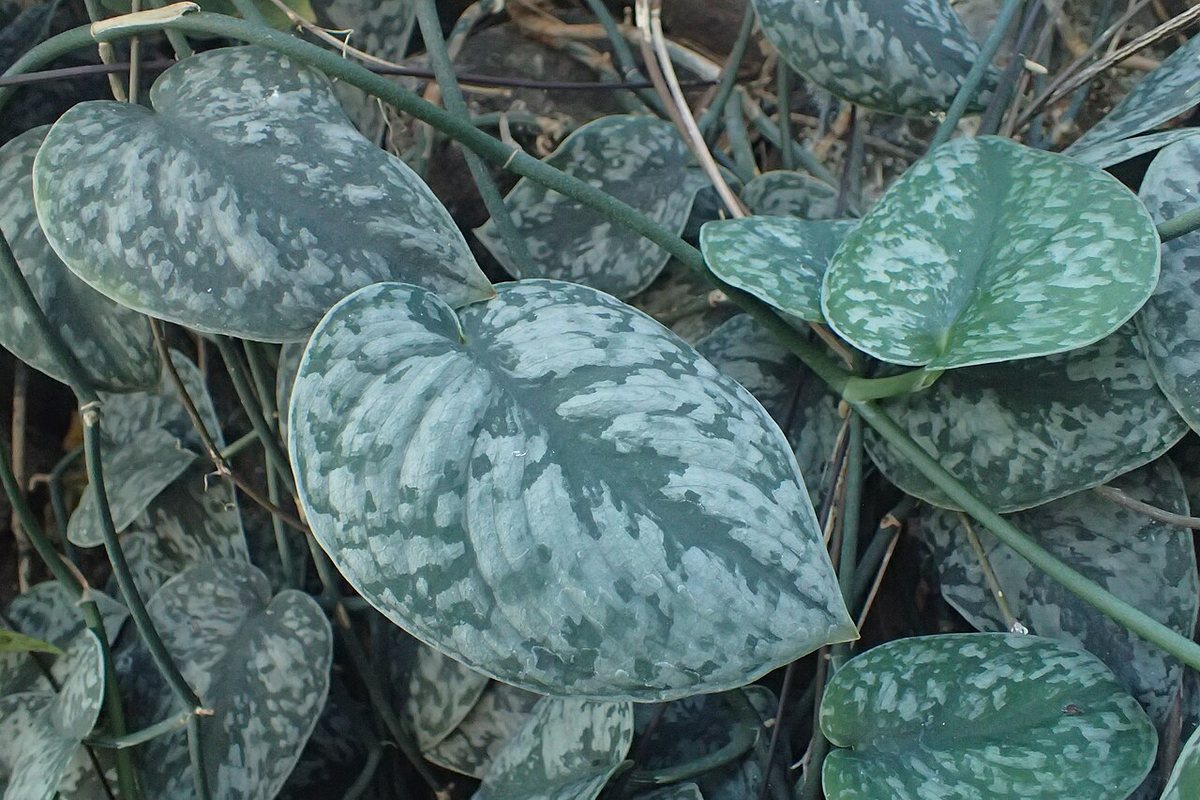
Satin pothos (Scindapsus pictus) is a slow-growing climbing aroid from Bangladesh and Malesia, with heart-shaped, matte green leaves splashed with silver. Despite its common name, it is not a true pothos: pothos is Epipremnum, a separate genus in the same arum family. NC State Extension recommends bright indirect light, a moist but well-drained mix and 18–29 °C (65–85 °F), and says it does not tolerate cool air or direct sun. The ASPCA lists it as toxic to cats, dogs and horses.
Scindapsus pictus quick facts
- Botanical name
- Scindapsus pictus
- Family
- Araceae (arum family)
- Native to
- Southeast Bangladesh and western and central Malesia
- Light
- Bright, indirect or filtered light, with shade from hot sun. Direct sun is not tolerated.
- Water
- Moist but well drained. UConn suggests letting the top 2.5–5 cm (1–2 in) dry between waterings; the RHS says to water sparingly outside the growing season.
- Temperature
- 18–29 °C (65–85 °F). Missouri Botanical Garden warns that air below 16 °C (60 °F) can damage the leaves.
- Size
- 46–91 cm (1.5–3 ft) indoors, trained on a stake or trailing from a basket; up to 3 m (10 ft) climbing in its native habitat.
- Common cultivars
- 'Argyraeus' (small dark green leaves with silver edges), 'Exotica' (larger silver splashes), 'Silvery Ann' (lance-shaped leaves with large silver blotches).
- Propagation
- Stem cuttings with at least one node.
- Cats and dogs
- Toxic. Toxic to dogs, cats and horses. The ASPCA lists insoluble calcium oxalates for satin pothos (Scindapsus pictus), causing oral irritation, pain and swelling of the mouth, tongue and lips, drooling, vomiting and difficulty swallowing. Source: ASPCA
Sources: NC State Extension: Scindapsus pictus; UConn Home & Garden Education Center: Scindapsus (2026); Missouri Botanical Garden: Scindapsus pictus; RHS: Scindapsus pictus 'Argyraeus'; ASPCA: Satin Pothos
Scindapsus pictus guides
Scindapsus Pictus care at a glance
- Light
- Bright indirect. Wants bright, indirect light — sensitive to both extremes. Too much direct sun causes burns, too little causes stretching. Grow lights: Thrives under artificial grow lights (LED or fluorescent, 10-12 hours/day). A great option if your space lacks natural light.
- Watering
- Water when the top 1-2 inches of soil feel dry. Adjust with the seasons — less in winter, more in summer.
- Humidity
- Loves higher humidity (60%+). If your air is dry, group it with other plants, use a pebble tray, or run a humidifier nearby.
- Temperature
- Standard room temperature (60-80°F / 15-27°C) is perfect. Avoid cold drafts and sudden temperature swings.
- Soil
- Needs well-draining soil — add perlite or orchid bark to a standard potting mix. Good drainage is critical to prevent root rot.
- Pets
- Toxic to dogs, cats and horses. The ASPCA lists insoluble calcium oxalates for satin pothos (Scindapsus pictus), causing oral irritation, pain and swelling of the mouth, tongue and lips, drooling, vomiting and difficulty swallowing.
- Difficulty
- Intermediate
Common Scindapsus pictus problems, answered
-
Satin Pothos Curling Leaves: Thirst, Root Rot or Cold?
Satin pothos leaves that curl inward lengthwise are most often short of water. That can mean dry mix, or roots damaged by mix that stayed wet. Cold air, direct sun and very dry air can also curl or damage the leaves.
-
Satin Pothos Yellow Leaves: Overwatering, Cold or Old Age?
Yellow leaves on a satin pothos most often point to mix that stays too wet, especially in winter when the plant uses less water. Long dry spells, cold air, direct sun and normal shedding of old leaves are the other common causes.
-
How to Propagate Satin Pothos (Scindapsus pictus) From Cuttings
Satin pothos is propagated from stem cuttings. Each cutting needs at least one node, where a leaf meets the stem, because that is where new roots and shoots form. Cuttings root in mix or water, in warmth, humidity and bright indirect light.
Questions about Scindapsus pictus
Is Scindapsus pictus toxic to cats and dogs?
Toxic to dogs, cats and horses. The ASPCA lists insoluble calcium oxalates for satin pothos (Scindapsus pictus), causing oral irritation, pain and swelling of the mouth, tongue and lips, drooling, vomiting and difficulty swallowing.
Get the Plant Mortality Checklist
Check moisture, roots and recent care changes before choosing a treatment. A practical checklist to keep.
Your checklist is ready!
We also sent it to your inbox. Check your email for the full download.
Open the ChecklistFree. No spam. Unsubscribe anytime.