Variegated monstera
Monstera deliciosa
Also known as: Thai Constellation, Albo Variegata, Monstera deliciosa 'Variegata', variegated Swiss cheese plant
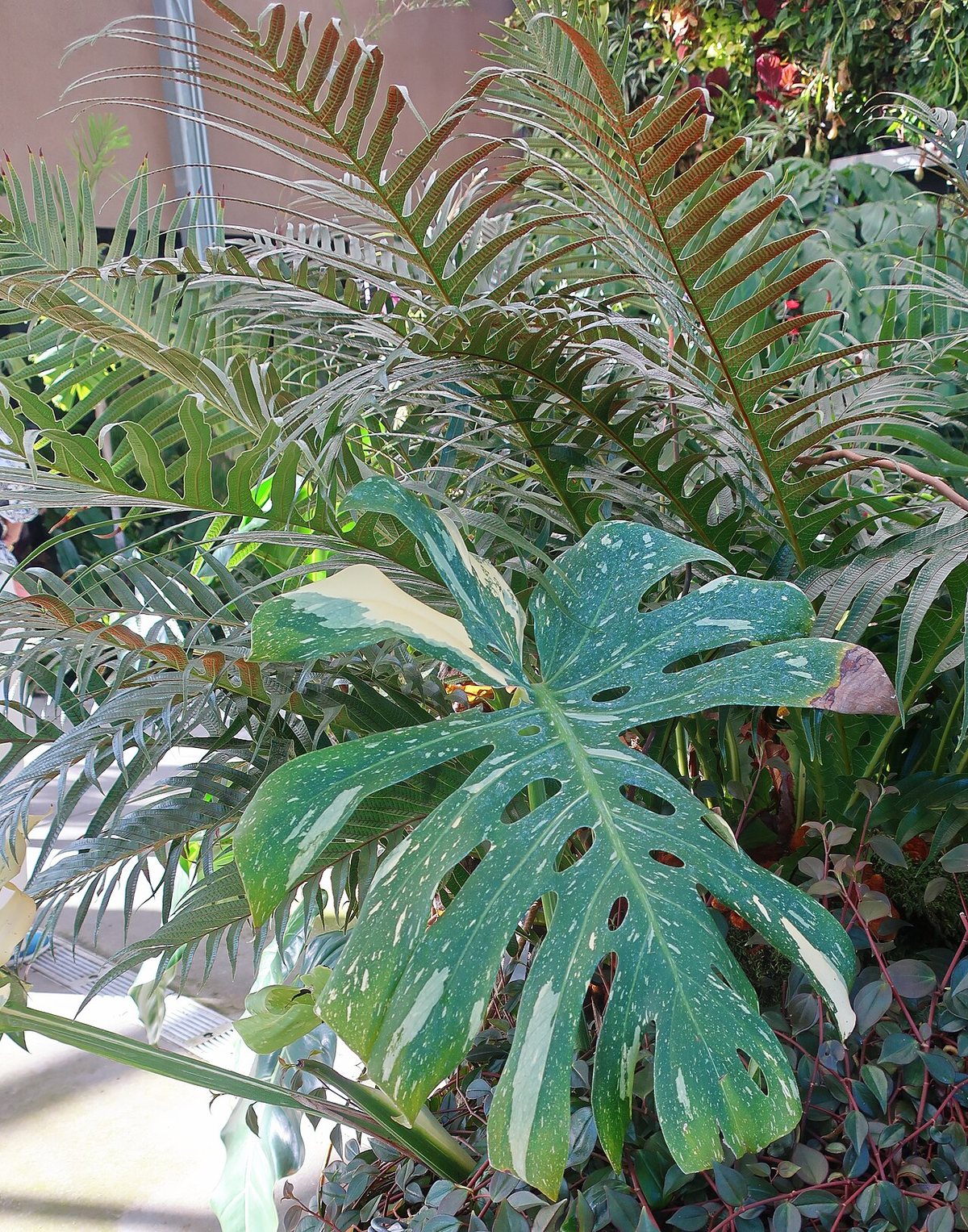

How do you care for a variegated monstera?
Light: Bright, indirect light with no strong direct sun. Variegated cultivars need more light than dark green plants. Water: Water thoroughly, then let the top quarter to one-third of the soil dry. Water less from fall to late winter. It is toxic to cats and dogs, so keep it out of their reach.
About Variegated monstera
Variegated monsteras are cultivars of Monstera deliciosa whose leaves are marbled, streaked or splashed with creamy white, such as 'Variegata', 'Albo Variegata' and 'Thai Constellation'. They grow more slowly than the green species: Missouri Botanical Garden gives about 3 m (10 ft) tall for 'Variegata', and the RHS describes 'Thai Constellation' as slower growing with more closely spaced leaves. NC State Extension notes that variegated cultivars need more light than dark green plants, while the RHS and Missouri Botanical Garden advise bright, indirect light without strong direct sun. Like the green species, they are toxic to cats and dogs.
Variegated monstera quick facts
- Botanical name
- Monstera deliciosa
- Family
- Araceae (arum family)
- Native to
- Garden cultivars; the species is native from Mexico to Panama
- Light
- Bright, indirect light with no strong direct sun. Variegated cultivars need more light than dark green plants.
- Water
- Water thoroughly, then let the top quarter to one-third of the soil dry. Water less from fall to late winter.
- Temperature and humidity
- 16–29 °C (60–85 °F) with moderate to high humidity.
- Support
- Grow on a pole or trellis; without support the stems tend to grow horizontally.
- Size
- 'Variegata' typically reaches about 3 m (10 ft) tall and 1.8 m (6 ft) wide. The RHS gives 2.5–4 m (8–13 ft) for 'Thai Constellation'.
- Propagation
- Stem cuttings.
- Cats and dogs
- Toxic. Toxic to dogs and cats. The ASPCA lists insoluble calcium oxalates for Monstera deliciosa, causing oral irritation, drooling, vomiting and difficulty swallowing. Variegated cultivars are not listed separately. Source: ASPCA
Sources: NC State Extension: Monstera deliciosa; Missouri Botanical Garden: Monstera deliciosa 'Variegata'; RHS: Monstera deliciosa 'Thai Constellation'; ASPCA: Swiss Cheese Plant
Variegated monstera guides
Variegated Monstera care at a glance
- Light
- Medium to bright indirect. Tolerates lower light but grows best in medium to bright indirect light. Can get leggy without enough light. Grow lights: Thrives under artificial grow lights (LED or fluorescent, 10-12 hours/day). A great option if your space lacks natural light.
- Watering
- Water when the top 1-2 inches of soil feel dry. Adjust with the seasons — less in winter, more in summer.
- Humidity
- Loves higher humidity (60%+). If your air is dry, group it with other plants, use a pebble tray, or run a humidifier nearby.
- Temperature
- Standard room temperature (60-80°F / 15-27°C) is perfect. Avoid cold drafts and sudden temperature swings.
- Soil
- Standard well-draining potting mix works well. Add perlite for extra drainage if you tend to overwater.
- Pets
- Toxic to dogs and cats. The ASPCA lists insoluble calcium oxalates for Monstera deliciosa, causing oral irritation, drooling, vomiting and difficulty swallowing. Variegated cultivars are not listed separately.
- Difficulty
- Beginner friendly
Common variegated monstera problems, answered
-
Variegated Monstera Light: Bright but Filtered
Variegated Monstera needs bright, indirect or filtered light. Too little light weakens growth, while abrupt or intense direct exposure can scorch pale leaf sections.
-
Variegated Monstera Reverting to Green: Why and What to Cut
A variegated Monstera reverts when the growing tip stops carrying the mutated, pale cells and starts making all-green leaves. Green shoots hold more chlorophyll, so they grow faster and can take over. More light does not reliably turn a reverted stem back.
Questions about Variegated monstera
Is variegated monstera toxic to cats and dogs?
Toxic to dogs and cats. The ASPCA lists insoluble calcium oxalates for Monstera deliciosa, causing oral irritation, drooling, vomiting and difficulty swallowing. Variegated cultivars are not listed separately.
Get the Plant Mortality Checklist
Check moisture, roots and recent care changes before choosing a treatment. A practical checklist to keep.
Your checklist is ready!
We also sent it to your inbox. Check your email for the full download.
Open the ChecklistFree. No spam. Unsubscribe anytime.