African violet
Streptocarpus ionanthus, formerly Saintpaulia ionantha
Also known as: Saintpaulia, Kenya violet
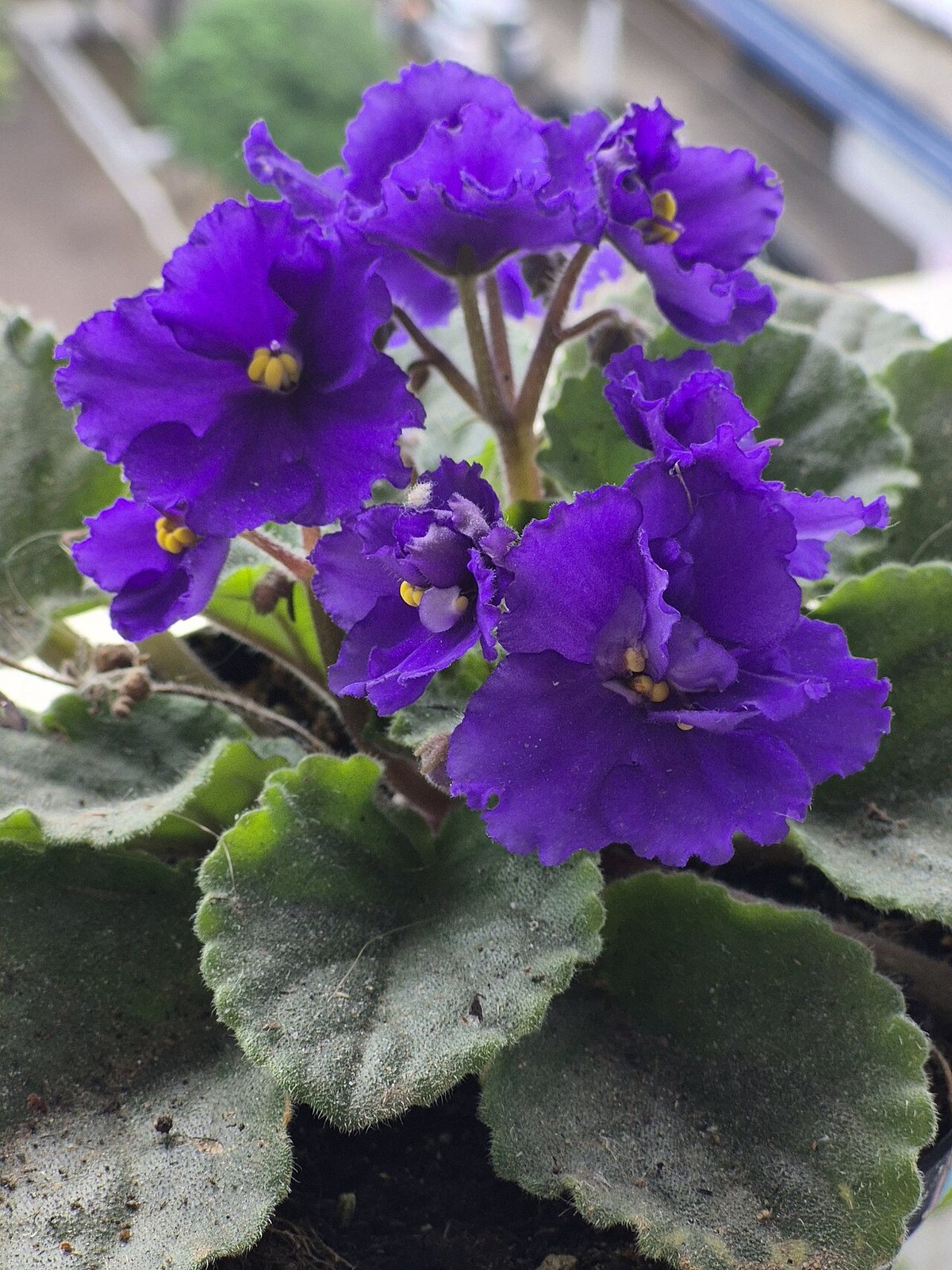

How do you care for an African violet?
Light: Bright, indirect light within 0.9 m (3 ft) of a large south-, east- or west-facing window, out of direct afternoon sun. Poor flowering usually means too little light. Water: Let the surface dry slightly, then bottom-water with warm water for about 30 minutes and pour off the excess. Cold water on the leaves causes pale spots and rings; overwatering causes crown and root rot. It is non-toxic to cats and dogs.
About African violet
African violet is a compact flowering houseplant from Tanzania, long sold as Saintpaulia; NC State Extension now files it as Streptocarpus ionanthus. Most plants grow 15–23 cm (6–9 in) tall and wide, with rosettes of hairy leaves and flowers in purple, blue, pink, red or white that can appear year-round. Extension services recommend bright light out of direct afternoon sun, 16–27 °C (60–80 °F), and a light, well-drained mix, and name overwatering, crown rot and cold water on the leaves as the main problems. The ASPCA lists African violets as non-toxic to cats, dogs and horses.
African violet quick facts
- Botanical name
- Streptocarpus ionanthus, formerly Saintpaulia ionantha
- Family
- Gesneriaceae (gloxinia family)
- Native to
- Tanzania, East Africa
- Light
- Bright, indirect light within 0.9 m (3 ft) of a large south-, east- or west-facing window, out of direct afternoon sun. Poor flowering usually means too little light.
- Grow lights
- Wisconsin Extension suggests lights 20–30 cm (8–12 in) above the plants for 14–16 hours a day, especially in winter.
- Water
- Let the surface dry slightly, then bottom-water with warm water for about 30 minutes and pour off the excess. Cold water on the leaves causes pale spots and rings; overwatering causes crown and root rot.
- Temperature
- 16–27 °C (60–80 °F). Nights below 16 °C (60 °F) stunt growth, so keep plants away from cold windows and drafts.
- Potting
- A light, well-drained African violet or soilless mix, in a pot about half the width of the plant. Slightly pot-bound plants flower better.
- Propagation
- Leaf cuttings.
- Cats and dogs
- Non-toxic. The ASPCA lists African violet (Saintpaulia spp.) as non-toxic to dogs, cats and horses. Source: ASPCA
Sources: NC State Extension: Streptocarpus ionanthus; Clemson Extension HGIC 1550: African Violet; University of Wisconsin–Madison Extension: African Violets; ASPCA: African Violet
African violet guides
- African violet care (Streptocarpus ionanthus): light for reblooming, watering, potting and grooming
- African violet grow lights: LED vs fluorescent and a usable setup
- Flowering houseplants: what makes 8 popular bloomers flower again
- Pet-safe houseplants by light: plants the ASPCA lists as non-toxic to cats and dogs
African Violet care at a glance
- Light
- Bright indirect. Wants bright, indirect light — sensitive to both extremes. Too much direct sun causes burns, too little causes stretching. Grow lights: Thrives under artificial grow lights (LED or fluorescent, 10-12 hours/day). A great option if your space lacks natural light.
- Watering
- Let the soil dry out significantly between waterings — this plant is very sensitive to overwatering. When in doubt, wait another day.
- Humidity
- Loves higher humidity (60%+). If your air is dry, group it with other plants, use a pebble tray, or run a humidifier nearby.
- Temperature
- Sensitive to cold — keep above 55°F (13°C). Avoid placing near drafty windows or exterior doors in winter.
- Soil
- Needs well-draining soil — add perlite or orchid bark to a standard potting mix. Good drainage is critical to prevent root rot.
- Pets
- The ASPCA lists African violet (Saintpaulia spp.) as non-toxic to dogs, cats and horses.
- Difficulty
- Moderate
Common African violet problems, answered
-
Cyclamen Mites on African Violets: How to Identify Them
Cyclamen mites are too small to see without a microscope, so you identify them by damage: stunted, crinkled, hairy-looking leaves in the centre of the crown and buds that are deformed or never open. Crown rot, cold, and low light can stunt a violet too, so check for those before you decide.
-
African Violet Powdery Mildew: Spot It and Stop It
Small circles of white or grey powder on the tops of African violet leaves, flowers or buds are usually powdery mildew. It spreads on crowded plants with poor air circulation, often in winter and early spring.
-
African Violet Getting Leggy: Fix the Neck and the Light
An African violet gets leggy in two ways. Long, thin leaf stalks reaching upward mean too little light. A bare 'neck' of stem below the leaves comes with age, as lower leaves die and fall off.
-
African Violet Propagation: Leaf Cuttings and Suckers
African violets are propagated from a single leaf with its stalk (a leaf petiole cutting), from suckers that grow beside the main crown, or by dividing a plant with several crowns. Leaf cuttings root in a few weeks and make several new plants each.
-
African Violet Not Blooming? Light First, Then Food and Pot
An African violet that won't bloom is usually short of light. Too little or too much fertilizer, cool temperatures, too few hours of darkness, an oversized pot and suckers crowding the crown are the other common reasons.
Questions about African violet
Is African violet toxic to cats and dogs?
The ASPCA lists African violet (Saintpaulia spp.) as non-toxic to dogs, cats and horses.
Get the Plant Mortality Checklist
Check moisture, roots and recent care changes before choosing a treatment. A practical checklist to keep.
Your checklist is ready!
We also sent it to your inbox. Check your email for the full download.
Open the ChecklistFree. No spam. Unsubscribe anytime.