Anthurium
Anthurium andraeanum
Also known as: flamingo flower, flamingo lily, laceleaf, painter's palette, tail flower
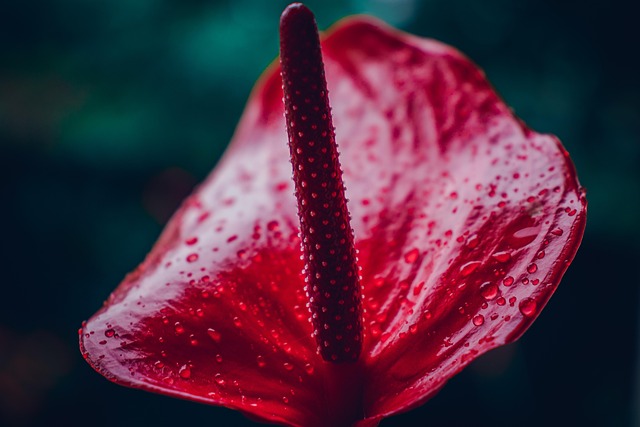
How do you care for an anthurium?
Light: Bright, indirect light. Direct sun scorches the leaves; too little light reduces flowering. Water: Water when the top 2.5 cm (1 in) of soil feels dry. Overwatering causes root rot. It is toxic to cats and dogs, so keep it out of their reach.
About Anthurium
Anthurium is a genus of more than 1,300 tropical aroids. The flamingo flower sold in bloom is Anthurium andraeanum, native to Colombia and Ecuador, which grows 30–45 cm (1–1.5 ft) tall as a houseplant. NC State Extension recommends bright, indirect light, warm and humid conditions, and watering when the top inch of soil is dry. It is toxic to cats and dogs.
Anthurium quick facts
- Botanical name
- Anthurium andraeanum
- Family
- Araceae (arum family)
- Native to
- Colombia and Ecuador (A. andraeanum); the genus spans the Caribbean and Central and South America
- Light
- Bright, indirect light. Direct sun scorches the leaves; too little light reduces flowering.
- Water
- Water when the top 2.5 cm (1 in) of soil feels dry. Overwatering causes root rot.
- Humidity
- Warm and humid; poor air circulation or wet foliage can cause leaf spots.
- Size
- 30–45 cm (1–1.5 ft) tall for A. andraeanum; leaves up to 30 cm (12 in) long.
- Species
- Collectors also grow velvet-leaved species such as A. clarinervium and A. crystallinum.
- Cats and dogs
- Toxic. Toxic to dogs and cats. The ASPCA lists insoluble calcium oxalates for flamingo flower, causing oral pain and swelling, drooling, vomiting and difficulty swallowing. Source: ASPCA
Sources: NC State Extension: Anthurium andraeanum; NC State Extension: Anthurium; ASPCA: Flamingo Flower
Anthurium guides
- Anthurium varieties: flowering and velvet-leaf types compared, from flamingo flower to clarinervium
- Anthurium clarinervium care: light, watering, humidity and an airy mix
- Anthurium crystallinum care: big velvet leaves, warmth, watering and leaf spot
- Acclimating tissue-culture plantlets: deflasking, humidity domes and hardening off, with anthurium as the example
Anthurium care at a glance
- Light
- Bright indirect. Wants bright, indirect light — sensitive to both extremes. Too much direct sun causes burns, too little causes stretching. Grow lights: Thrives under artificial grow lights (LED or fluorescent, 10-12 hours/day). A great option if your space lacks natural light.
- Watering
- Water when the top 1-2 inches of soil feel dry. Adjust with the seasons — less in winter, more in summer.
- Humidity
- Loves higher humidity (60%+). If your air is dry, group it with other plants, use a pebble tray, or run a humidifier nearby.
- Temperature
- Sensitive to cold — keep above 55°F (13°C). Avoid placing near drafty windows or exterior doors in winter.
- Soil
- Needs well-draining soil — add perlite or orchid bark to a standard potting mix. Good drainage is critical to prevent root rot.
- Pets
- Toxic to dogs and cats. The ASPCA lists insoluble calcium oxalates for flamingo flower, causing oral pain and swelling, drooling, vomiting and difficulty swallowing.
- Difficulty
- Moderate
Common anthurium problems, answered
-
How Often to Water an Anthurium: Check the Mix, Not the Date
Anthuriums do not need a fixed watering day. Water thoroughly when the top 2.5–5 cm (1–2 in) of mix has dried, which happens faster in bright, warm rooms and small pots than in winter or large pots.
-
Overwatered Anthurium: Signs, Root Checks and Rescue
An overwatered anthurium usually shows yellowing older leaves, wilting or drooping while the mix is still wet, and roots that are brown, soft or slipping apart. The cause is mix that stays wet too long, which starves roots of oxygen and favors root rot.
-
Spider Mites on Anthurium: Confirm, Rinse and Treat
Spider mites on an anthurium show as fine pale speckling on the leaves, tiny moving dots and pale cast skins on the leaf undersides, and fine webbing in heavy infestations. They feed by sucking out leaf cells and build up fastest on warm, dry, stressed plants.
-
Anthurium Problems: Symptoms, Causes and First Checks
Most anthurium problems trace back to light, watering, feeding, humidity or temperature. Yellow older leaves usually mean wet roots, leaves without flowers mean too little light, brown tips point to dry air, salts or thirst, and spreading V-shaped edge lesions suggest bacterial blight.
-
Anthurium Brown Spots: Read the Pattern, Then Fix the Cause
Brown spots on an anthurium come from leaf-spot disease, sun scorch, salt or fertilizer build-up, dry air at the edges, or cold water. The shape and position of the spot point to the cause: V-shaped edge lesions suggest bacterial blight, ringed spots with yellow margins suggest fungal leaf spot, and broad tan blotches suggest sunburn.
-
Anthurium Not Blooming? Fix the Light First
An anthurium that grows leaves but no flowers is most often short of light. Low or unbalanced feeding, old spent blooms left on the plant, cold, and root problems from wet mix can also hold flowering back.
-
Anthurium Leaves Curling: Water, Dry Air, Cold or Thrips?
Anthurium leaves usually curl because the plant is short of water, either from a dry root ball or from roots too damaged to take water up. Dry air, cold draughts, salt build-up from heavy feeding and sap-feeding pests such as thrips are the other common causes.
-
Anthurium Brown Leaf Tips: Dry Air, Salts, Thirst or Light?
Brown leaf tips on an anthurium usually come from dry air, salt build-up from feeding or hard tap water, or a root ball left too dry. Bleached leaf centres with brown tips point to too much light instead. Brown wedges that start at the edge and spread inward are a disease sign, not tip burn.
Questions about Anthurium
Is anthurium toxic to cats and dogs?
Toxic to dogs and cats. The ASPCA lists insoluble calcium oxalates for flamingo flower, causing oral pain and swelling, drooling, vomiting and difficulty swallowing.
Get the Plant Mortality Checklist
Check moisture, roots and recent care changes before choosing a treatment. A practical checklist to keep.
Your checklist is ready!
We also sent it to your inbox. Check your email for the full download.
Open the ChecklistFree. No spam. Unsubscribe anytime.