Chinese evergreen
Aglaonema
Also known as: aglaonema, Philippine evergreen, golden evergreen, poison dart plant, Aglaonema modestum, Aglaonema commutatum
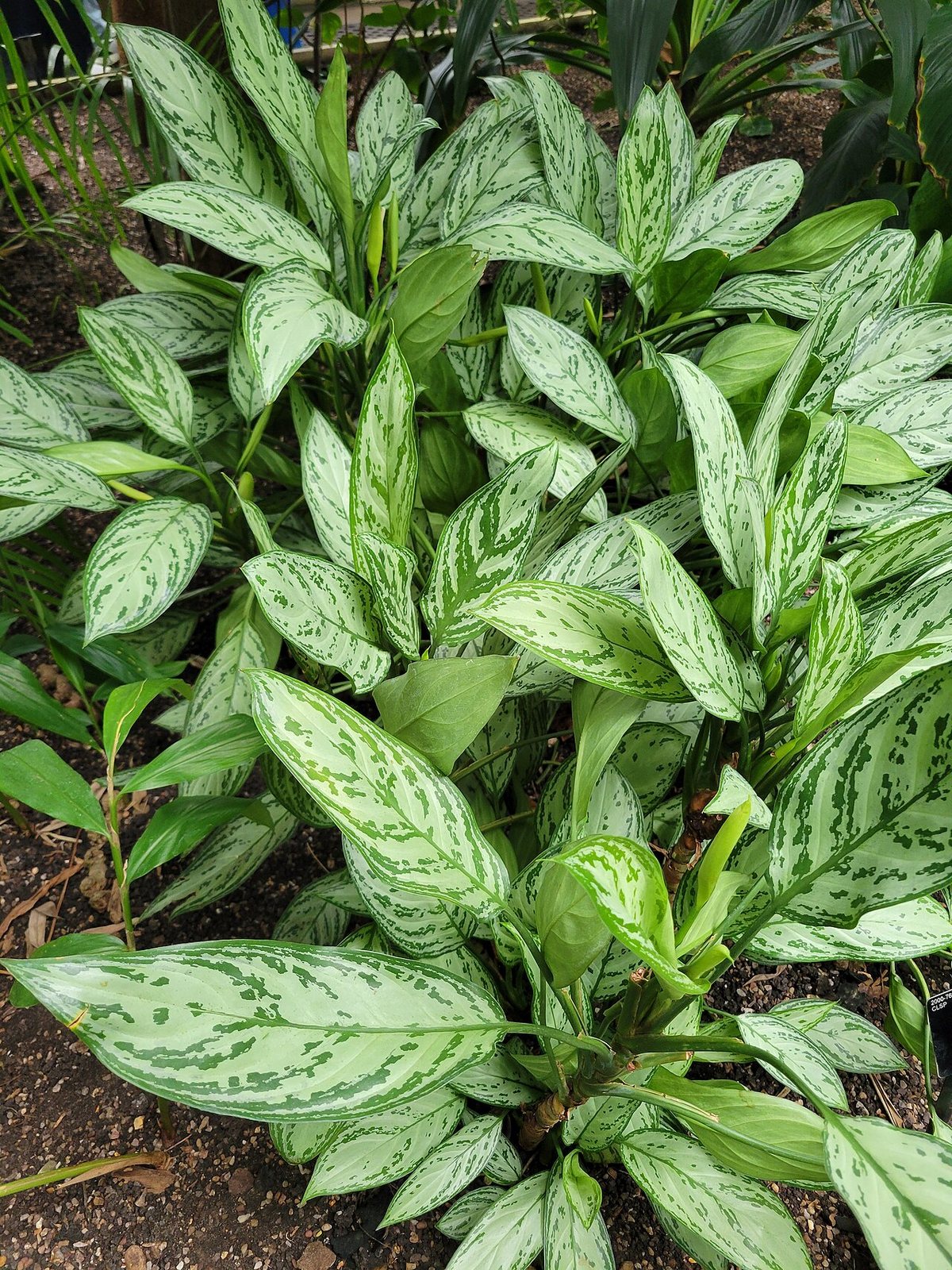

How do you care for a Chinese evergreen?
Light: Low to moderate, indirect light. Solid green cultivars cope with low light; variegated types need more. Keep it out of direct sun. Water: Keep moist but not wet: water with room-temperature water when the top 2.5–5 cm (1–2 in) is dry, and water less in winter. It is toxic to cats and dogs, so keep it out of their reach.
About Chinese evergreen
Chinese evergreen (Aglaonema) is a genus of 26 species of tropical foliage plants in the arum family, native from Southeast Asia to New Guinea and grown for lance-shaped leaves patterned in green, silver, pink or red. Clemson Extension calls it one of the most durable houseplants: it tolerates poor light, dry air and drought, and grows 30–91 cm (1–3 ft) tall and wide. Plain green cultivars grow in low light and variegated ones need low to moderate indirect light; both like 20–27 °C (68–80 °F) and water once the top 2.5–5 cm (1–2 in) of soil is dry. The ASPCA lists Chinese evergreen as toxic to cats, dogs and horses.
Chinese evergreen quick facts
- Botanical name
- Aglaonema
- Family
- Araceae (arum family)
- Native to
- Northeast India and Southeast Asia to New Guinea
- Light
- Low to moderate, indirect light. Solid green cultivars cope with low light; variegated types need more. Keep it out of direct sun.
- Water
- Keep moist but not wet: water with room-temperature water when the top 2.5–5 cm (1–2 in) is dry, and water less in winter.
- Temperature and humidity
- 20–27 °C (68–80 °F). It tolerates 13 °C (55 °F) but is damaged by chilling below 10 °C (50 °F). Tolerates low humidity but prefers moderate.
- Size
- 30–91 cm (1–3 ft) tall and wide, depending on species; leaves are 10–20 cm (4–8 in) long. Older plants get leggy as the stem lengthens.
- Common species
- A. commutatum (ribbon aglaonema), A. modestum (Chinese evergreen), A. nitidum (Burmese evergreen), A. pictum (camouflage plant) and A. crispum (pewter plant), plus many hybrid cultivars.
- Propagation
- Division, stem or tip cuttings, or air layering. Its leaves have 5–8 main side veins, which tells it apart from Dieffenbachia.
- Cats and dogs
- Toxic. The ASPCA lists Chinese evergreen (Aglaonema modestum) as toxic to dogs, cats and horses. It names insoluble calcium oxalates, causing oral irritation, pain and swelling of the mouth, tongue and lips, heavy drooling, vomiting and difficulty swallowing. NC State adds that the sap can irritate skin. Source: ASPCA
Sources: NC State Extension: Aglaonema; Clemson Extension HGIC 1500: Chinese Evergreen; ASPCA: Chinese Evergreen
Chinese evergreen guides
- Chinese evergreen care (Aglaonema): light, watering, cold damage and leaf problems
- Chinese evergreen varieties: 18 types of Aglaonema compared, from Maria and Silver Bay to Siam Aurora
- Dracaena vs Chinese evergreen: how to tell them apart, and how their care differs
- Low light houseplants: 12 plants for north windows and dim rooms, with pet safety
- Toxic houseplants for cats and dogs: what each one contains and the signs to watch for
Chinese Evergreen care at a glance
- Light
- Bright indirect. Wants bright, indirect light — sensitive to both extremes. Too much direct sun causes burns, too little causes stretching. Grow lights: Thrives under artificial grow lights (LED or fluorescent, 10-12 hours/day). A great option if your space lacks natural light.
- Watering
- Let the soil dry out significantly between waterings — this plant is very sensitive to overwatering. When in doubt, wait another day.
- Humidity
- Loves higher humidity (60%+). If your air is dry, group it with other plants, use a pebble tray, or run a humidifier nearby.
- Temperature
- Standard room temperature (60-80°F / 15-27°C) is perfect. Avoid cold drafts and sudden temperature swings.
- Soil
- Needs well-draining soil — add perlite or orchid bark to a standard potting mix. Good drainage is critical to prevent root rot.
- Pets
- The ASPCA lists Chinese evergreen (Aglaonema modestum) as toxic to dogs, cats and horses. It names insoluble calcium oxalates, causing oral irritation, pain and swelling of the mouth, tongue and lips, heavy drooling, vomiting and difficulty swallowing. NC State adds that the sap can irritate skin.
- Difficulty
- Intermediate
Common Chinese evergreen problems, answered
-
Chinese Evergreen Propagation: Division, Cuttings, Layering
Chinese evergreen (Aglaonema) is propagated by dividing a clump into rooted shoots, by rooting tip or stem cuttings, or by air layering a tall stem. A leggy plant with a bare lower stem is the classic candidate: the leafy top can be rooted as a new plant.
-
Chinese Evergreen Drooping: Thirst, Wet Roots, Cold or Light?
A drooping Chinese evergreen is usually short of water in its leaves: the mix has dried out, or roots kept too wet have rotted and can no longer take water up. Pink and red cultivars droop the same way. Cold is the next suspect, since Aglaonema is very sensitive to chilling, and long stalks can also flop in low light.
-
Chinese Evergreen Root Rot: Treatment and the Peroxide Question
Chinese evergreen root rot comes from mix that drains slowly or is watered too often, especially in a cool room. Leaves droop and yellow while the mix is damp, stems may soften at the soil line, and the roots turn brown to black and mushy. No extension guidance we found recommends hydrogen peroxide; the published treatment is trimming, fresh mix and less water.
Questions about Chinese evergreen
Is Chinese evergreen toxic to cats and dogs?
The ASPCA lists Chinese evergreen (Aglaonema modestum) as toxic to dogs, cats and horses. It names insoluble calcium oxalates, causing oral irritation, pain and swelling of the mouth, tongue and lips, heavy drooling, vomiting and difficulty swallowing. NC State adds that the sap can irritate skin.
Get the Plant Mortality Checklist
Check moisture, roots and recent care changes before choosing a treatment. A practical checklist to keep.
Your checklist is ready!
We also sent it to your inbox. Check your email for the full download.
Open the ChecklistFree. No spam. Unsubscribe anytime.