Jade plant
Crassula ovata, formerly Crassula argentea
Also known as: money plant, jade tree, lucky plant
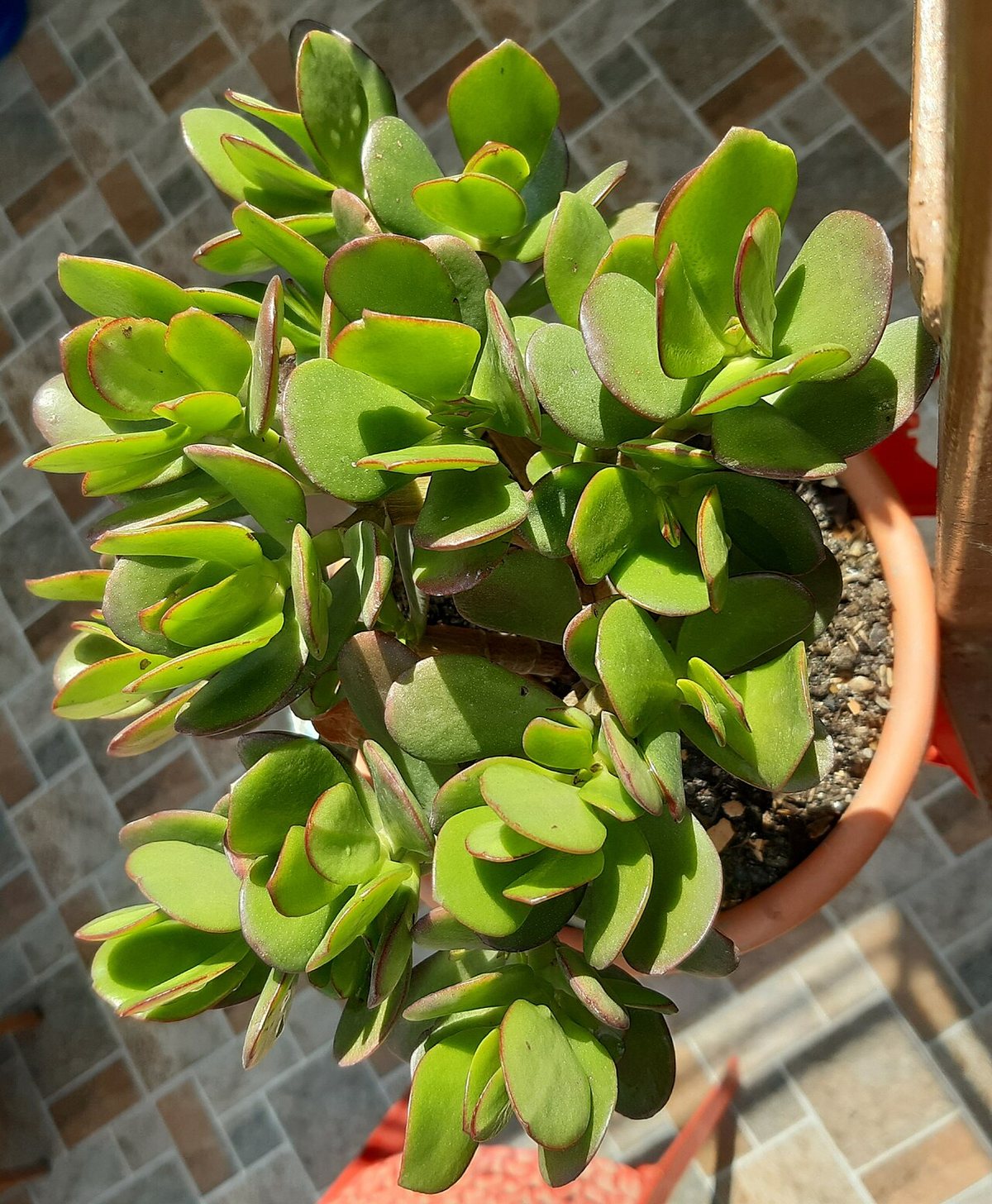

How do you care for a jade plant?
Light: Sunny window with some afternoon shade. Missouri Extension notes it tolerates lighting as low as 25 foot-candles, but growth will be thin and leaves small. Water: Water in moderation when the soil is dry; reduce watering from fall to late winter. Overwatering causes leaf fall and root rot. It is toxic to cats and dogs, so keep it out of their reach.
About Jade plant
Jade plant (Crassula ovata) is a succulent shrub from South Africa that slowly forms a miniature tree with thick, oval leaves. NC State Extension recommends a sunny indoor spot with some afternoon shade, well-drained soil, and watering in moderation only when the soil is dry. It is toxic to cats and dogs.
Jade plant quick facts
- Botanical name
- Crassula ovata, formerly Crassula argentea
- Family
- Crassulaceae (stonecrop family)
- Native to
- South Africa
- Light
- Sunny window with some afternoon shade. Missouri Extension notes it tolerates lighting as low as 25 foot-candles, but growth will be thin and leaves small.
- Water
- Water in moderation when the soil is dry; reduce watering from fall to late winter. Overwatering causes leaf fall and root rot.
- Size
- 0.9–1.8 m (3–6 ft) tall; dwarf cultivars include 'Minima' and 'Crosby's Compact'.
- Flowers
- Rarely blooms indoors.
- Propagation
- Leaf cuttings root easily.
- Cats and dogs
- Toxic. Toxic to dogs and cats. The ASPCA lists vomiting, depression and incoordination as signs. Source: ASPCA
Sources: NC State Extension: Crassula ovata; University of Missouri Extension: Lighting Indoor Houseplants (G6515); ASPCA: Jade Plant
Jade Plant care at a glance
- Light
- Bright indirect. Wants bright, indirect light — sensitive to both extremes. Too much direct sun causes burns, too little causes stretching. Grow lights: Thrives under artificial grow lights (LED or fluorescent, 10-12 hours/day). A great option if your space lacks natural light.
- Watering
- Let the soil dry out significantly between waterings — this plant is very sensitive to overwatering. When in doubt, wait another day.
- Humidity
- Loves higher humidity (60%+). If your air is dry, group it with other plants, use a pebble tray, or run a humidifier nearby.
- Temperature
- Prefers moderate temperatures (60-80°F). Keep away from radiators and intense afternoon sun windows.
- Soil
- Needs well-draining soil — add perlite or orchid bark to a standard potting mix. Good drainage is critical to prevent root rot.
- Pets
- Toxic to dogs and cats. The ASPCA lists vomiting, depression and incoordination as signs.
- Difficulty
- Intermediate
Common jade plant problems, answered
-
Jade Plant Edema: Corky Bumps, Blisters and What to Change
Small raised blisters on jade leaves, often on the undersides, that later turn tan, brown and corky are typical of edema. It happens when roots take up water faster than the leaves can lose it, usually with wet mix in cool, humid, dim conditions.
-
White Crust on Jade Plant Soil or Leaves: Salts and Hard Water
A white or yellowish crust on the mix, the pot rim or the outside of a clay pot is mineral and fertilizer salt left behind as water evaporates. Small white dots on jade leaves are usually salt as well, and wipe off with a damp cloth.
-
Jade Plant Light Requirements: How Much Sun Indoors
Jade plant is a high-light houseplant. Clemson Extension says it does best with four or more hours of direct sun a day, such as in a south-facing window; too little light gives thin, stretched growth with small leaves.
-
Jade Plant Sunburn: Signs, Red Edges and How to Recover
Sunburn on a jade plant shows as pale, bleached patches that turn tan or brown and dry, usually on the most exposed leaves soon after a move into stronger sun. Red leaf edges in bright light are normal and not a burn. The burned tissue will not recover, but the plant usually does.
-
Jade Plant Yellow Leaves: Overwatering, Light or Pests?
Yellow jade leaves most often mean the mix is staying too wet: Iowa State Extension links overwatering in succulents to yellow, soft, mushy leaves that drop. A long dry spell, too little light, pests and normal loss of old lower leaves can also yellow a jade. Leaf texture and the state of the mix separate them.
-
Leggy Jade Plant: Fix Low Light, Then Prune and Re-Root
A leggy jade plant, with long, thin, drooping stems and wide gaps between leaf pairs, is almost always short of light. Stretched stems will not shorten again, but pruning them back in spring and moving the plant into several hours of direct sun gives compact new growth.
-
Jade Plant Propagation: Stem and Leaf Cuttings That Root
Jade plant roots easily from stem cuttings or single whole leaves. The step that matters most is letting the cut surface dry and callus for a few days before it touches mix, then keeping that mix only slightly damp.
-
Mealybugs on Jade Plant: Causes and a Soap-Free Fix
White, cottony tufts where jade leaves meet the stems are mealybugs, the most common insect pest of jade plants. They almost always arrive on another infested plant, then spread by crawling between pots that touch.
-
Jade Plant Brown Spots on Leaves: Edema, Sun, Drought or Rot?
Brown spots on jade leaves usually come from one of four things: edema (raised, corky bumps after wet mix in cool, dim conditions), sun damage (flat tan or brown patches after a jump in light), drought (spotting and shrivelling in bone-dry mix), or rot (soft, dark tissue in wet mix). Touch and the state of the mix tell them apart.
Questions about Jade plant
Is jade plant toxic to cats and dogs?
Toxic to dogs and cats. The ASPCA lists vomiting, depression and incoordination as signs.
Get the Plant Mortality Checklist
Check moisture, roots and recent care changes before choosing a treatment. A practical checklist to keep.
Your checklist is ready!
We also sent it to your inbox. Check your email for the full download.
Open the ChecklistFree. No spam. Unsubscribe anytime.