Peace lily
Spathiphyllum
Also known as: spathe flower, white sails, Spathiphyllum wallisii
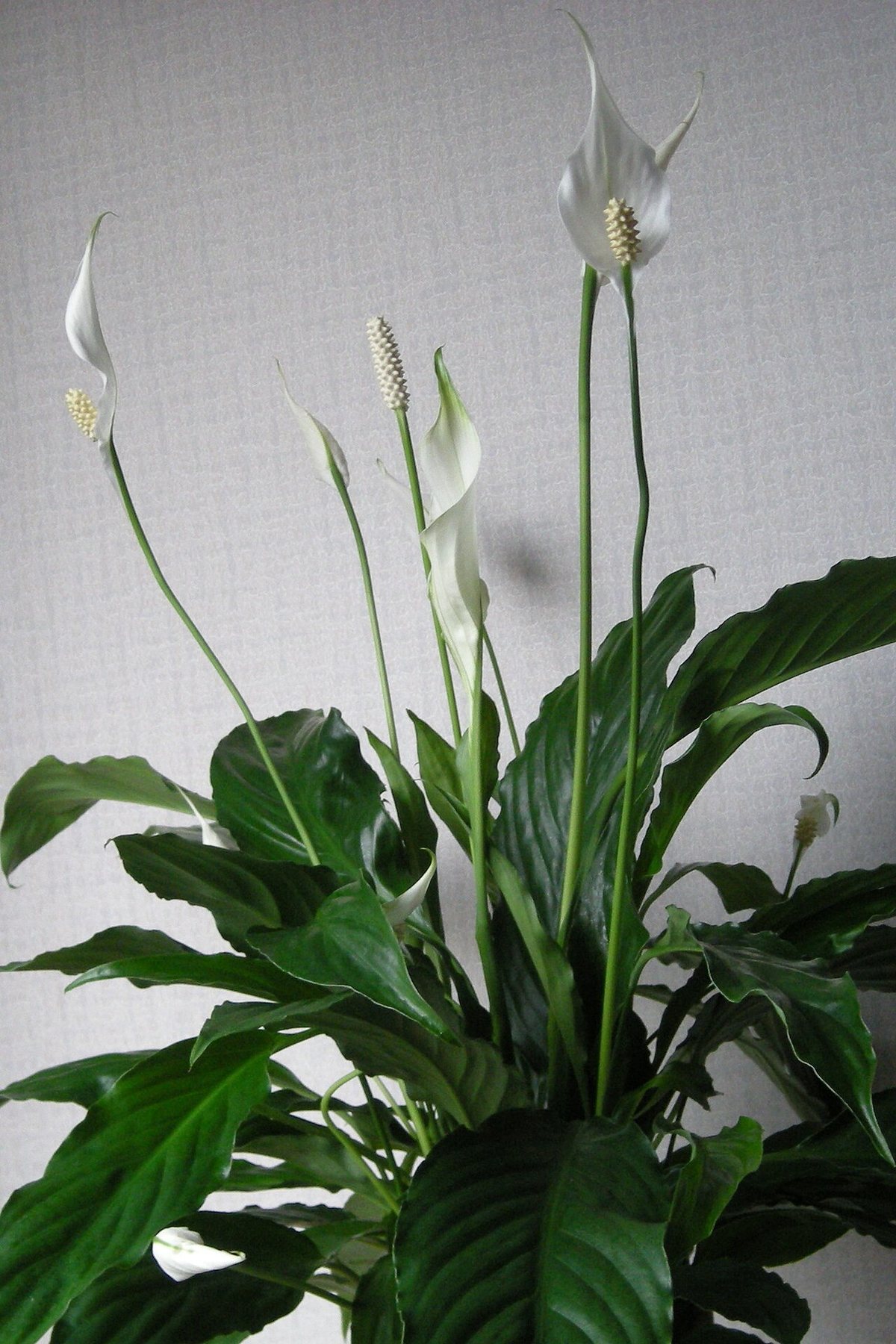

How do you care for a peace lily?
Light: Partial to deep shade or bright, indirect light; never direct sun. Clemson Extension notes it is one of the few foliage plants that flowers in low light, but too little light is a common reason it does not bloom. Water: Keep moist but not soggy, letting the surface dry slightly between waterings. It wilts when too dry. Never leave it standing in a saucer of water. It is toxic to cats and dogs, so keep it out of their reach.
About Peace lily
Peace lily (Spathiphyllum) is a genus of about 60 species of evergreen aroids from Mexico, tropical America, Malesia and the western Pacific, grown for glossy dark green leaves and white spathes. Despite the name, it is not a true lily. NC State Extension recommends partial to deep shade with no direct sun, 20–29 °C (68–85 °F), and soil kept moist but not soggy; indoors it typically reaches about 90 cm (3 ft) high and wide. It is toxic to cats and dogs.
Peace lily quick facts
- Botanical name
- Spathiphyllum
- Family
- Araceae (arum family)
- Native to
- Mexico, tropical America, Malesia and the western Pacific
- Light
- Partial to deep shade or bright, indirect light; never direct sun. Clemson Extension notes it is one of the few foliage plants that flowers in low light, but too little light is a common reason it does not bloom.
- Water
- Keep moist but not soggy, letting the surface dry slightly between waterings. It wilts when too dry. Never leave it standing in a saucer of water.
- Temperature
- 20–29 °C (68–85 °F) by day and no more than about 6 °C (10 °F) cooler at night. Below 16 °C (60 °F) risks cold damage.
- Size
- Typically about 90 cm (3 ft) high and wide indoors. Dwarf cultivars stay 30–38 cm (12–15 in); 'Sensation' reaches 1.8 m (6 ft).
- Feeding and repotting
- Feed at one-quarter strength; over-fertilizing burns leaf tips and roots. Keep it slightly pot-bound and move up only 2.5–5 cm (1–2 in) in pot size.
- Propagation
- Division.
- Cats and dogs
- Toxic. Toxic to dogs and cats. The ASPCA lists insoluble calcium oxalates, causing oral irritation, intense burning of the mouth, tongue and lips, excessive drooling, vomiting and difficulty swallowing. Source: ASPCA
Sources: NC State Extension: Spathiphyllum; Clemson Extension HGIC: Peace Lily (HGIC 1512); ASPCA: Peace Lily
Peace lily guides
- Peace lily care (Spathiphyllum): light, watering, feeding, repotting and problems
- Peace lily and air purification: what the NASA study measured for Spathiphyllum
- Low light houseplants: 12 plants for north windows and dim rooms, with pet safety
- Flowering houseplants: what makes 8 popular bloomers flower again
- Peace lily not blooming? Light, plant age, feeding and why shop plants flower
Peace Lily care at a glance
- Light
- Bright indirect. Wants bright, indirect light — sensitive to both extremes. Too much direct sun causes burns, too little causes stretching. Grow lights: Thrives under artificial grow lights (LED or fluorescent, 10-12 hours/day). A great option if your space lacks natural light.
- Watering
- Water when the top 1-2 inches of soil feel dry. Adjust with the seasons — less in winter, more in summer.
- Humidity
- Loves higher humidity (60%+). If your air is dry, group it with other plants, use a pebble tray, or run a humidifier nearby.
- Temperature
- Sensitive to cold — keep above 55°F (13°C). Avoid placing near drafty windows or exterior doors in winter.
- Soil
- Needs well-draining soil — add perlite or orchid bark to a standard potting mix. Good drainage is critical to prevent root rot.
- Pets
- Toxic to dogs and cats. The ASPCA lists insoluble calcium oxalates, causing oral irritation, intense burning of the mouth, tongue and lips, excessive drooling, vomiting and difficulty swallowing.
- Difficulty
- Moderate
Common peace lily problems, answered
-
Peace Lily Moldy Soil: Remove Mold Without Harming the Plant
White or grey fuzz on peace lily potting mix is usually a fungus feeding on the organic matter in the mix, not on the plant. It is rarely harmful in itself, but it means the surface is staying wet. A thick mat can block water and attract fungus gnats.
-
Peace Lily Sunburn: Identify Damage and Support Recovery
Peace lily sunburn is supported by pale, bleached, tan, or scorched areas on light-facing tissue after direct-sun exposure. Brown tips alone can instead result from underwatering, low humidity, fertilizer salts, or root stress.
-
Peace Lily Drooping: Dry Mix, Wet Roots or Repotting?
A drooping peace lily is short of water in its leaves. Usually the mix is too dry, but wet, rotting roots, recent repotting, a pot packed with roots, fertilizer salts, and cold or hot spots cause the same droop.
-
Peace Lily Yellow Leaves: Read the Pattern, Then Fix It
Yellow peace lily leaves usually trace back to watering: soggy mix that damages roots, or mix allowed to dry until the plant wilts. Fertilizer salts, cold drafts, direct sun, and nutrient shortage are the other common causes.
-
Peace Lily Brown Tips: Salts, Dry Spells or Dry Air?
Brown tips on a peace lily usually come from fertilizer salt build-up, mix allowed to dry out too far, a root-bound pot, or dry indoor air. Water chemistry can add to the problem.
-
Drooping Peace Lily: Conditions That Help It Recover
A drooping peace lily recovers when the cause matches the fix: water for a dry root ball, drier mix and root care for a wet one, and steady warmth and shade for a plant stressed by cold, sun, or repotting.
-
Fungus Gnats on a Peace Lily: Dry the Mix, Break the Cycle
Small dark flies around a peace lily are usually fungus gnats breeding in damp, organic potting mix. Adults are a nuisance; large numbers of larvae can damage roots. The moist mix that peace lilies like is what lets them build up.
-
Peace Lily Drooping After Repotting: Transplant Shock Fixes
A peace lily that wilts after repotting or dividing usually has injured roots that can't yet supply enough water. Check that the old root ball is moist, that the mix drains, and that roots are not rotting, then hold conditions steady while new roots grow.
-
Peace Lily Spider Mites: Confirm Them, Then Treat
Spider mites on a peace lily show as fine pale speckling on the leaves, with tiny moving dots and sometimes silk webbing underneath. Dry indoor air in winter and a plant short of water make outbreaks worse.
-
When to Repot a Peace Lily, and How to Do It
Repot a peace lily when roots grow out of the drainage holes or circle on top of the mix, or when it wilts again soon after a thorough watering. It likes to be slightly pot-bound, so do not repot on a schedule.
-
Peace Lily Root Rot: Signs, Causes and How to Save It
Root rot is likely when a peace lily wilts or yellows while its mix is still wet, and the roots are brown to black, soft, and shed their outer layer when pulled. It usually follows overwatering, a saucer of standing water, or a pot that is too big.
-
Leggy Peace Lily: Long, Floppy Stalks and How to Fix Them
A leggy peace lily has long, thin leaf stalks that splay outward or lean toward the window, often with few flowers. The usual cause is too little light, sometimes with too much fertilizer. A crowded old clump can also flop open as it outgrows the pot.
Questions about Peace lily
Is peace lily toxic to cats and dogs?
Toxic to dogs and cats. The ASPCA lists insoluble calcium oxalates, causing oral irritation, intense burning of the mouth, tongue and lips, excessive drooling, vomiting and difficulty swallowing.
Get the Plant Mortality Checklist
Check moisture, roots and recent care changes before choosing a treatment. A practical checklist to keep.
Your checklist is ready!
We also sent it to your inbox. Check your email for the full download.
Open the ChecklistFree. No spam. Unsubscribe anytime.