Schefflera
Heptapleurum, formerly Schefflera
Also known as: umbrella tree, umbrella plant, dwarf umbrella tree, dwarf schefflera, octopus tree, Schefflera arboricola, Schefflera actinophylla, Brassaia actinophylla
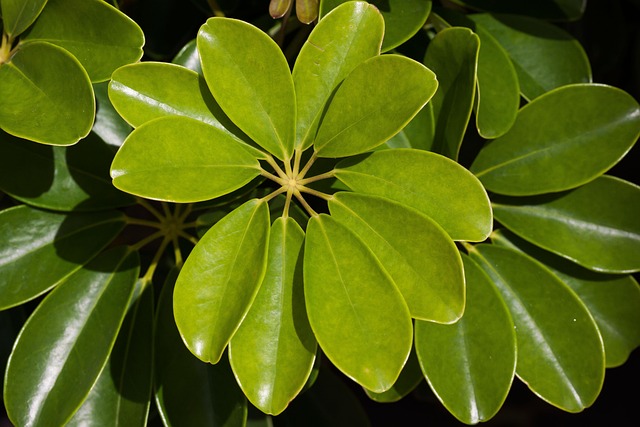
How do you care for a schefflera?
Light: Medium to bright light. NC State suggests filtered light, such as through a sheer curtain, for the dwarf umbrella tree; bright direct light indoors burns its leaves. Water: Water thoroughly, then let the mix dry to about 1.3 cm (½ in) deep. Never leave water standing in the saucer. It is toxic to cats and dogs, so keep it out of their reach.
About Schefflera
Two plants are sold as schefflera or umbrella plant: the dwarf umbrella tree (Schefflera arboricola), with 7 to 9 small, glossy leaflets per leaf, and the larger umbrella tree (S. actinophylla), with 5 to 18 long-stalked leaflets. NC State Extension and Kew now place both in Heptapleurum, though the old names remain on plant labels. Clemson Extension recommends medium to bright light, letting the mix dry about 1.3 cm (½ in) deep before watering, and 18–24 °C (65–75 °F) by day with nights above 16 °C (60 °F); it links leaf drop to overwatering, low humidity and chilling. The ASPCA lists both as toxic to cats and dogs.
Schefflera quick facts
- Botanical name
- Heptapleurum, formerly Schefflera
- Family
- Araliaceae (ivy family)
- Native to
- Taiwan and Hainan (dwarf umbrella tree); southern New Guinea to northern Australia (umbrella tree)
- Light
- Medium to bright light. NC State suggests filtered light, such as through a sheer curtain, for the dwarf umbrella tree; bright direct light indoors burns its leaves.
- Water
- Water thoroughly, then let the mix dry to about 1.3 cm (½ in) deep. Never leave water standing in the saucer.
- Temperature
- 18–24 °C (65–75 °F) by day and above 16 °C (60 °F) at night. Keep above 10 °C (50 °F) and away from vents, radiators and drafts.
- Size
- Both reach about 1.2–1.8 m (4–6 ft) in a container indoors, per NC State. Prune just above a leaf to keep a plant smaller.
- Pests
- Spider mites, mealybugs and scale insects. UF/IFAS notes umbrella trees grown indoors are susceptible to spider mites.
- Propagation
- Stem cuttings, air layering or seed.
- Cats and dogs
- Toxic. The ASPCA lists schefflera and umbrella tree as toxic to dogs and cats. For schefflera it names calcium oxalate crystals, causing oral irritation, drooling, vomiting and difficulty swallowing; for umbrella tree (Brassaia actinophylla) it says the most common effects are mild vomiting and diarrhea. NC State notes the sap can irritate skin. Source: ASPCA
Sources: NC State Extension: Heptapleurum arboricola; NC State Extension: Heptapleurum actinophyllum; Clemson Extension HGIC 1511: Schefflera; UF/IFAS Extension ENH743: Schefflera actinophylla; Kew Plants of the World Online: Heptapleurum actinophyllum; ASPCA: Schefflera; ASPCA: Umbrella Tree
Schefflera care at a glance
- Light
- Medium to bright indirect. Tolerates lower light but grows best in medium to bright indirect light. Can get leggy without enough light. Grow lights: Thrives under artificial grow lights (LED or fluorescent, 10-12 hours/day). A great option if your space lacks natural light.
- Watering
- Water when the top 1-2 inches of soil feel dry. Adjust with the seasons — less in winter, more in summer.
- Humidity
- Loves higher humidity (60%+). If your air is dry, group it with other plants, use a pebble tray, or run a humidifier nearby.
- Temperature
- Standard room temperature (60-80°F / 15-27°C) is perfect. Avoid cold drafts and sudden temperature swings.
- Soil
- Standard well-draining potting mix works well. Add perlite for extra drainage if you tend to overwater.
- Pets
- The ASPCA lists schefflera and umbrella tree as toxic to dogs and cats. For schefflera it names calcium oxalate crystals, causing oral irritation, drooling, vomiting and difficulty swallowing; for umbrella tree (Brassaia actinophylla) it says the most common effects are mild vomiting and diarrhea. NC State notes the sap can irritate skin.
- Difficulty
- Moderate
Common schefflera problems, answered
-
Umbrella Tree vs Dwarf Schefflera: How to Identify Each
Two different plants are sold as schefflera. The umbrella tree (Schefflera actinophylla) has large, drooping leaflets, often 5 to 18 per leaf; the dwarf umbrella tree (Schefflera arboricola) has smaller, rounded-tipped leaflets, usually 7 to 9. The ASPCA lists both umbrella tree and schefflera as toxic to dogs and cats.
-
Schefflera Dropping Leaves: Cold, Water, Light or a Move?
An umbrella plant drops leaves when it is chilled, kept too wet, short of light or humidity, or moved to a new spot. Clemson Extension names excessive watering, low humidity and chilling as the usual causes, and a recent move can add a few weeks of shedding.
-
Schefflera Pests: Spider Mites, Mealybugs and Scale
The pests that trouble indoor scheffleras are spider mites, mealybugs and scale insects. Spider mites leave pale speckling and fine webbing; mealybugs look like cotton in leaf joints; scale are small immobile bumps on stems and leaf undersides, often with sticky honeydew and black sooty mold.
-
Umbrella Plant Scale Treatment: Scrape, Prune, Oil
Small, immobile tan or brown bumps on schefflera stems and leaflet undersides, often with sticky leaves and black sooty mould, are scale insects. Clemson lists schefflera among the houseplants that should not be sprayed with insecticidal soap, so treatment relies on scraping, pruning and a labeled oil or systemic product.
-
Schefflera Brown Spots on Leaves: Disease, Cold, Sun or Pests?
Brown spots on schefflera leaves come from leaf spot disease (fungal Alternaria or bacterial Pseudomonas, both favored by wet leaves), from cold or drafts, from direct sun, or from sap-feeding pests such as spider mites and scale. Spot shape, a yellow halo, the leaf surface and what is on the underside separate them.
Questions about Schefflera
Is schefflera toxic to cats and dogs?
The ASPCA lists schefflera and umbrella tree as toxic to dogs and cats. For schefflera it names calcium oxalate crystals, causing oral irritation, drooling, vomiting and difficulty swallowing; for umbrella tree (Brassaia actinophylla) it says the most common effects are mild vomiting and diarrhea. NC State notes the sap can irritate skin.
Get the Plant Mortality Checklist
Check moisture, roots and recent care changes before choosing a treatment. A practical checklist to keep.
Your checklist is ready!
We also sent it to your inbox. Check your email for the full download.
Open the ChecklistFree. No spam. Unsubscribe anytime.