Spider plant
Chlorophytum comosum
Also known as: airplane plant, ribbon plant, spider ivy
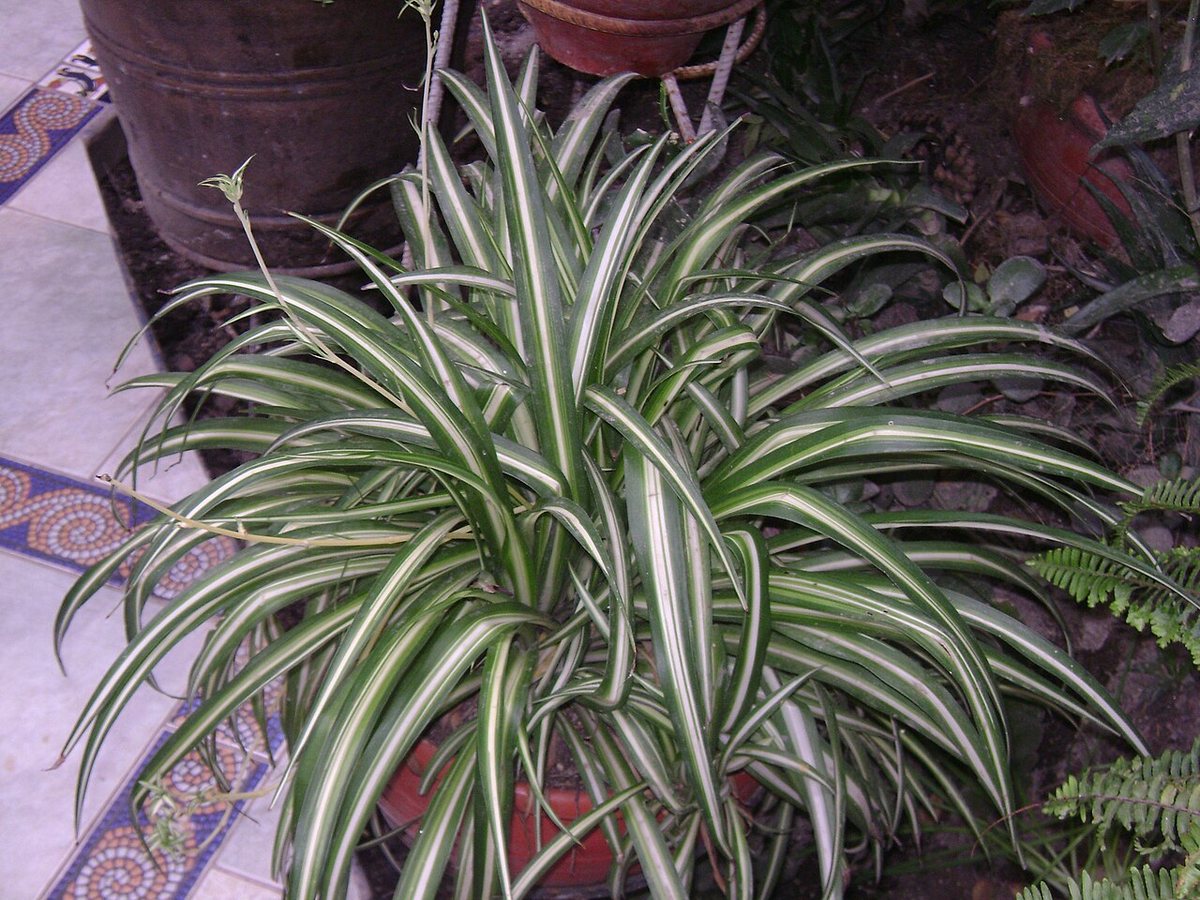

How do you care for a spider plant?
Light: Medium light is best; tolerates deep shade. Keep out of direct sun. Water: Keep the soil moist and reduce watering in winter. It tolerates short dry spells. It is non-toxic to cats and dogs.
About Spider plant
Spider plant (Chlorophytum comosum) is a clump-forming houseplant in the asparagus family, grown for its arching striped leaves and the plantlets it produces on long stolons. NC State Extension notes it prefers medium light, tolerates deep shade, and is intolerant of direct sun. The ASPCA lists it as non-toxic to cats and dogs.
Spider plant quick facts
- Botanical name
- Chlorophytum comosum
- Family
- Asparagaceae (asparagus family)
- Native to
- Tropical West Africa to Ethiopia and South Africa
- Light
- Medium light is best; tolerates deep shade. Keep out of direct sun.
- Water
- Keep the soil moist and reduce watering in winter. It tolerates short dry spells.
- Water quality
- Chlorine and fluoride in tap water can cause brown leaf tips, according to NC State.
- Size
- 30–45 cm (1–1.5 ft) tall, spreading 30–60 cm (1–2 ft).
- Plantlets
- Form after at least three weeks of short days (under 12 hours of light). Over-fertilizing reduces plantlet formation.
- Propagation
- Plantlets or division.
- Cats and dogs
- Non-toxic. Non-toxic to dogs and cats, according to the ASPCA. Source: ASPCA
Sources: NC State Extension: Chlorophytum comosum; ASPCA: Spider Plant
Spider plant guides
- Spider plant care (Chlorophytum comosum): light, water, brown tips and babies
- Spider plant propagation: rooting plantlets, dividing the clump, and why a plant makes no babies
- Spider plant root rot: how to tell, what to cut and when to start again
- Spider plant vs pothos: how to tell them apart, and how their care differs
Spider Plant care at a glance
- Light
- Bright indirect. Wants bright, indirect light — sensitive to both extremes. Too much direct sun causes burns, too little causes stretching. Grow lights: Thrives under artificial grow lights (LED or fluorescent, 10-12 hours/day). A great option if your space lacks natural light.
- Watering
- Water when the top 1-2 inches of soil feel dry. Adjust with the seasons — less in winter, more in summer.
- Humidity
- Loves higher humidity (60%+). If your air is dry, group it with other plants, use a pebble tray, or run a humidifier nearby.
- Temperature
- Prefers moderate temperatures (60-80°F). Keep away from radiators and intense afternoon sun windows.
- Soil
- Needs well-draining soil — add perlite or orchid bark to a standard potting mix. Good drainage is critical to prevent root rot.
- Pets
- Non-toxic to dogs and cats, according to the ASPCA.
- Difficulty
- Moderate
Common spider plant problems, answered
-
Spider Plant Brown Tips: Tap Water, Salts, Dry Air or Thirst?
Brown tips on a spider plant usually come from fluoride or chlorine in tap water, salts from fertilizer building up in the pot, very dry air, or soil left to dry out too far. Strong sun and soggy soil can also cause it. Often several of these act together.
-
Spider Plant Propagation: Plantlets and Division, Step by Step
Spider plants propagate most easily from the plantlets that form on their long, wiry stems. Root a plantlet while it is still attached to the parent, or pot one that already has roots. Large clumps can also be divided.
-
Spider Plant Sunburn: Scorched Leaves and How to Fix Them
Sunburn on a spider plant is leaf scorch from more direct sun than the leaves are used to, often after a move to a sunnier window or outdoors. The scorched tissue will not recover, but the plant usually keeps growing once the light is corrected.
-
Spider Plant Leaves Curling: Thirst, Rot, Heat, Sun or Aphids?
Spider plant leaves that curl usually mean the root ball has dried out, or that wet, rotting roots can no longer supply water. Hot, dry air and salt build-up, too much direct sun, and aphids on soft new growth are the other causes. Some cultivars, such as 'Bonnie', have curly leaves by nature.
-
Leggy Spider Plant: Trim Runners, Fix Light, Divide
A leggy spider plant usually has one of three things going on: long runners and heavy plantlets pulling the plant out of shape, pale, floppy leaves from too little light, or a crowded, worn-out clump. Each needs a different fix: trimming, more light, or dividing and repotting.
-
Spider Plant Not Producing Babies? Age, Night Length, Feeding
Spider plant babies (plantlets or spiderettes) grow on long flowering stems, so a plant with no babies is a plant that is not sending up those stems. The usual reasons are a plant that is still young, nights that are too short or interrupted by lamps, heavy feeding, or a pot with too much spare room.
Questions about Spider plant
Is spider plant toxic to cats and dogs?
Non-toxic to dogs and cats, according to the ASPCA.
Get the Plant Mortality Checklist
Check moisture, roots and recent care changes before choosing a treatment. A practical checklist to keep.
Your checklist is ready!
We also sent it to your inbox. Check your email for the full download.
Open the ChecklistFree. No spam. Unsubscribe anytime.