A plant that is wilting, yellowing or dropping leaves is worrying, and the urge is to do everything at once. Resist it. Water, fertilizer, a new pot and a pest spray are four different fixes, and applying them together makes it impossible to tell which one helped or harmed.
UC IPM’s guidance on houseplant problems is a useful starting point: most decline comes from improper care, such as too little light or too much water. The RHS agrees that most problems can be solved by changing the growing environment and care. Work through the checks below in order and change one thing at a time.
Before you start
- Separate the plant. The RHS suggests isolating a poorly plant from the rest of your collection until you have found the cause. UC IPM says to isolate any plant with pests or disease straight away.
- Note what changed. A move, a repot, a heater switched on, a new watering routine. Clemson HGIC says leaf drop after a significant change of environment should last only about three weeks.
- Gather a hand lens, clean secateurs and gloves. The RHS lists these for a plant health check.
Check 1: roots and potting mix
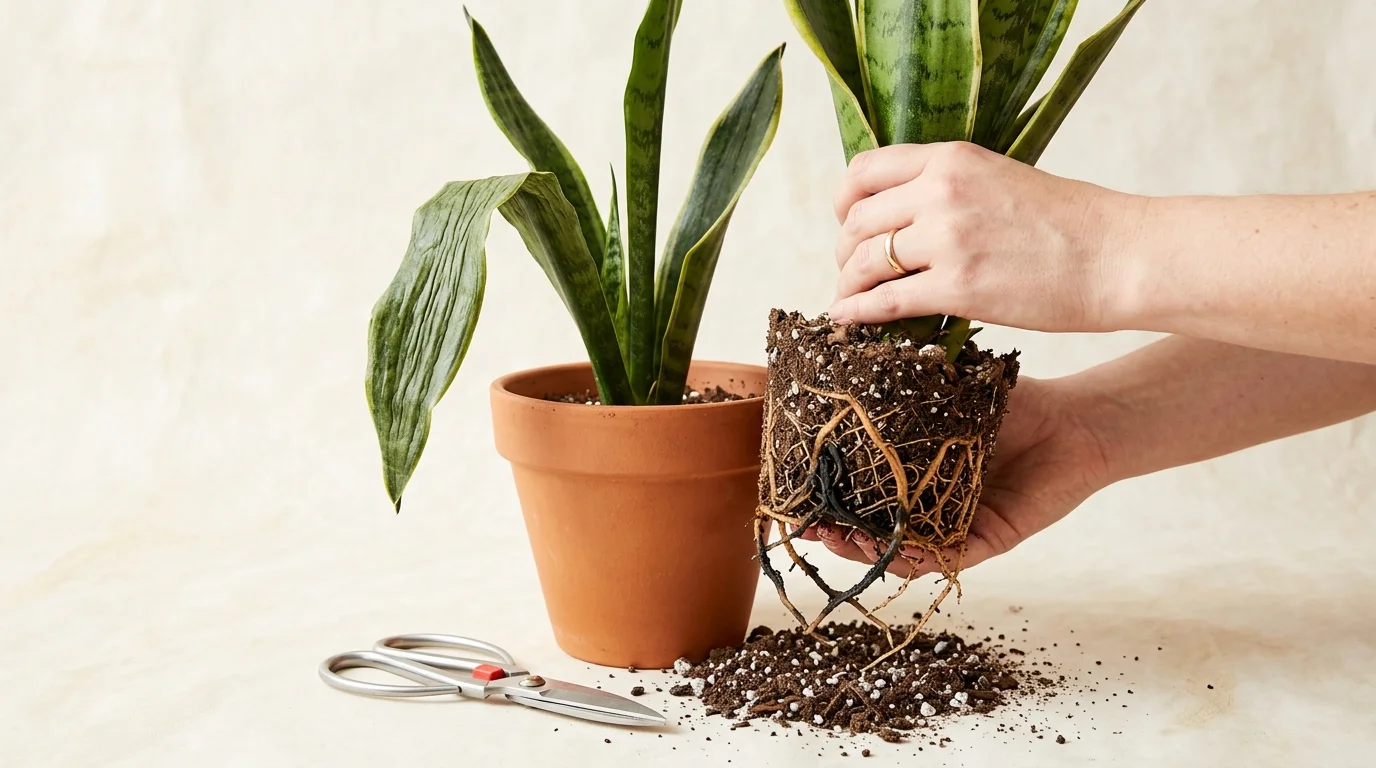
Push a finger about 5 cm (2 in) into the mix, as University of Maryland Extension suggests, or lift the pot to judge its weight. Then, if the plant is wilting or collapsing, slide it out of the pot. UC IPM says to inspect the roots whenever wilting occurs.
| What you find | What it points to |
|---|---|
| Light-coloured, firm roots (Maryland) | Roots are working. Look above ground: water, light, pests or temperature |
| Dark, soft roots (Maryland) | Root rot. See our root rot causes guide and treatment steps |
| Roots filling the pot, mix dries within days | Pot-bound. Clemson says these plants wilt because there is too little mix to hold water |
| White crust on the mix or pot rim | Salt buildup from fertilizer or hard water (Maryland, Clemson) |
Check 2: watering
Maryland describes the two extremes. A plant that is too dry wilts and turns grey-green. One that is too wet drops leaves or turns yellow. The RHS adds a useful pattern: with underwatering, older leaves at the base yellow and fall first, while overwatering yellows old and new leaves at the same time.
If the mix is bone dry: Iowa State says dry potting mix can be hard to rewet, so water may run straight through. Water several times, or soak the root ball for about 30 minutes, then let it drain.
If the mix is wet: do not add more. Empty any water in the saucer or outer pot; Iowa State says roots that sit in water rot. Let the mix dry before watering again, and check that the pot has a drainage hole.
Check 3: light
Iowa State calls light the most limiting factor for houseplants. Too little light shows as leaf drop, pale, spindly or slow growth, and no flowers. Too much shows as bleached or damaged leaves, or leaves that yellow or brown and drop.
The RHS suggests moving many houseplants closer to a south- or west-facing window in winter, when sunlight is weaker. If you move a plant into stronger light, Maryland says to do it gradually, because a sudden change can bleach leaves. See our light requirements chart for your plant.
Check 4: pests
Check leaf undersides, leaf joints and stems with a hand lens. UC IPM’s diagnostic table links these symptoms to pests:
- Yellowed leaves with tiny speckles, later bronzed, sometimes with webbing: spider mites.
- Sticky leaves, sooty mould, small brown, white or green objects in leaf joints: scale, mealybugs or aphids.
Clemson notes that pests usually arrive on new plants or on plants that spent the summer outdoors. If you find insects, use our houseplant pest guide to identify them before you treat.
Check 5: temperature and air
Iowa State says 18–24 °C (65–75 °F) suits most houseplants, and to avoid temperatures below 13 °C (55 °F). Keep plants away from heat registers, cold doors and the gap between a curtain and a cold window. Maryland notes that cold injury can keep showing for up to a week after exposure.
The RHS separates the two extremes. Wilting, rolling, bleaching and crisp leaves suggest heat stress. Blackened leaves, drooping and collapse suggest cold damage. Low humidity, especially with heating on, gives brown tips and edges; see our humidity guide.
Check 6: feeding and salts
A struggling plant is not a hungry plant. Maryland lists reduced growth, brown leaf tips, dropping lower leaves, dead root tips and wilting as signs of soluble salt buildup. It recommends leaching with plain water every four to six months. Do not add fertilizer while the roots are damaged; our fertilizer schedule covers when feeding helps.
Tidy up the damage
The RHS says to cut off leaves that are mouldy, shrivelled, completely brown or completely yellow, because they will not recover. Keep leaves that are mostly green until the plant makes a new flush of growth. Removing them too early could delay recovery.
Decide: nurse it, propagate it or start again
| Situation | Option | Source |
|---|---|---|
| Firm roots, cause found and corrected | Keep the plant and wait for new growth | RHS |
| Only a few rotted roots | Cut them out and repot in sterile mix | Clemson HGIC 2251 |
| Roots badly rotted or infested, but healthy stems remain | Root a cutting from healthy tissue in sterile mix | Maryland, Clemson HGIC 2252 |
| Severe root rot or soft crown | Discard the plant | Maryland, UW–Madison |
| Mottled yellow-green leaves (virus) or cyclamen mites | Discard the plant | Maryland |
| Heavy infestation that does not respond | Discard before it spreads | UC IPM |
UC IPM is honest about this: once a problem is detected, it is sometimes not practical to restore a plant’s health, and replacing it may be better. If you propagate, our propagation guide explains which plants root from stem cuttings and which need division.
What recovery looks like
Damaged leaves stay damaged. The useful signs are firm stems, no new damage spreading, and healthy new leaves. Roots take time: Penn State notes that dead roots do not recover, and new ones must grow before the top of the plant can catch up.
For the full symptom-by-symptom map, use our plant doctor flowchart. Plant-specific guides include peace lily drooping, snake plant drooping, fiddle-leaf fig dropping leaves and pothos overwatering.
References
- UC Statewide IPM Program: Pest Notes: Houseplant Problems
- Royal Horticultural Society: How to help a poorly houseplant
- University of Maryland Extension: Watering Indoor Plants
- University of Maryland Extension: Diagnose Indoor Plant Problems
- University of Maryland Extension: Root Rots of Indoor Plants
- Iowa State University Extension and Outreach: How to Care for Houseplants
- Clemson Cooperative Extension HGIC 2251: Houseplant Diseases & Disorders
- Clemson Cooperative Extension HGIC 2252: Common Houseplant Insects & Related Pests
- UW–Madison Plant Disease Diagnostics Clinic: Root Rots on Houseplants
- Penn State Extension, G. W. Moorman: Fungal Root Rots and Chemical Fungicide Use