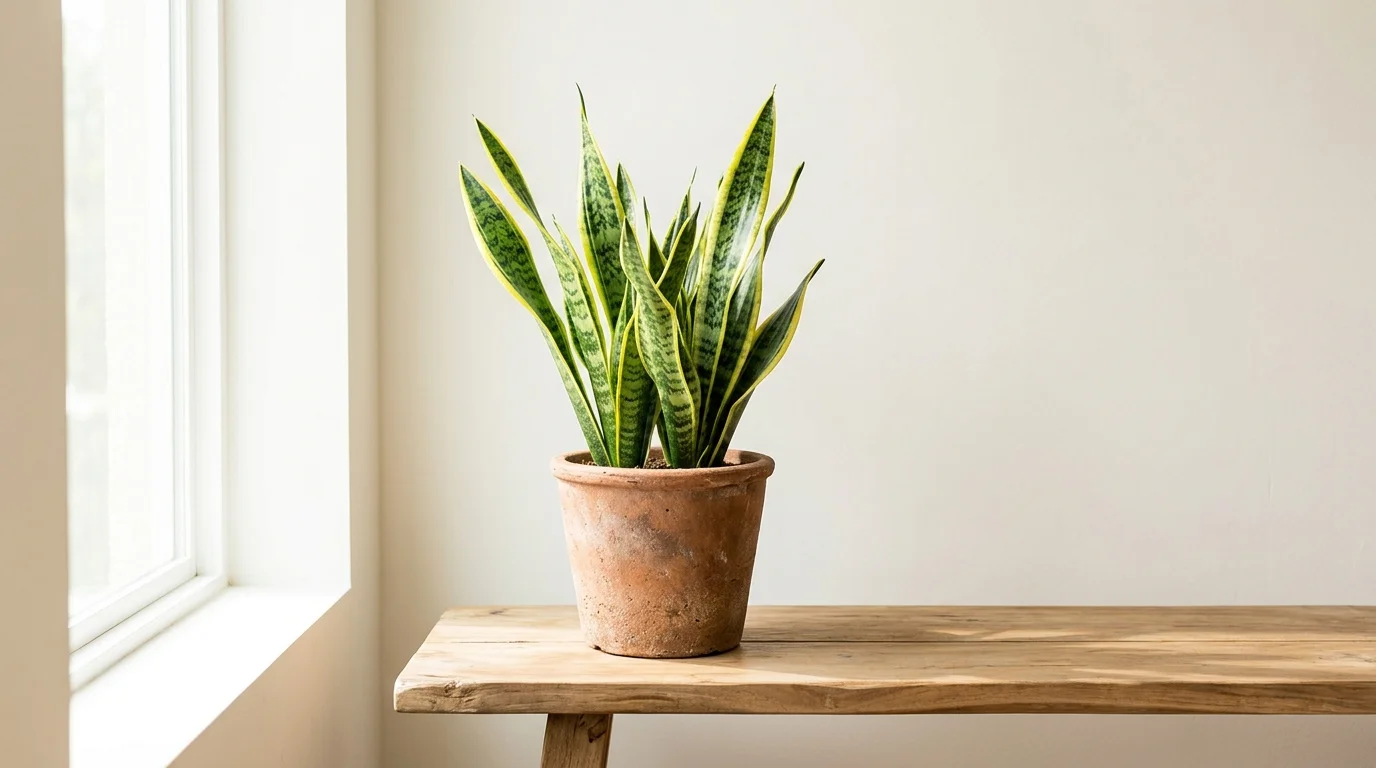
The easiest houseplant is the one that suits the spot you have. Iowa State Extension chose its list of low-maintenance plants by a few tests. Each had to tolerate low light, uneven watering and low humidity, and stay attractive with minimal care. We use the same idea here and start with your light, because University of Missouri Extension calls lack of light the most common factor limiting houseplant growth.
This is an editorial shortlist matched to room conditions, not a growing trial.
Step 1: work out how much light you have
University of Illinois Extension gives a simple guide by window direction and distance:
| Light level | North window | East or west window | South window |
|---|---|---|---|
| Low | A few feet away | 1–3 m (3–10 ft) away | 4.5–6 m (15–20 ft) away |
| Medium | Directly in front | A few feet away | 1–3 m (3–10 ft) away |
| High (bright) | – | Directly in front | Up to 1.5 m (5 ft) away |
Missouri Extension adds two limits. Even low-light plants usually get too little light more than 3 m (10 ft) from an average window. Trees, overhangs and nearby buildings reduce what comes through the glass. A plant short of light shows long gaps between leaves, small new leaves, pale growth and yellow lower leaves that drop.
Step 2: pick from the plants that suit that light
| Plant | Light (minimum to best) | Watering | Pets (ASPCA) |
|---|---|---|---|
| Cast iron plant (Aspidistra elatior) | Low; tolerates poor light (Missouri) | Well-drained, evenly moist; tolerates dry spells (Iowa State) | Non-toxic |
| Chinese evergreen (Aglaonema) | Low (Illinois); medium to low (NC State) | Keep moist (NC State) | Toxic |
| Snake plant (Dracaena trifasciata) | Low (Illinois); best in medium to bright (Missouri) | Let dry between waterings (Iowa State) | Toxic |
| Pothos (Epipremnum aureum) | Low to medium (Missouri) | Let dry moderately (Iowa State) | Toxic |
| Spider plant (Chlorophytum comosum) | Tolerates low; best in medium (Missouri) | Average moisture (Iowa State) | Non-toxic |
| Peperomia (Peperomia obtusifolia) | Medium (Illinois, Missouri) | Let dry moderately; rots if overwatered (Iowa State) | Non-toxic |
| Jade plant (Crassula ovata, listed as C. argentea) | High (Illinois, NC State) | Avoid overwatering (Missouri) | Toxic |
Low light: north windows and rooms set back from the glass
Cast iron plant
Missouri Extension calls cast iron plant one of the best plants where only low light exists, and notes it tolerates cool rooms. Iowa State adds that it endures heat, dust, low light and lack of water better than most houseplants. NC State’s handbook names it first among plants for homes with very little light. Expect slow growth. The ASPCA lists it as non-toxic to dogs, cats and horses, which makes it the safest pick for a dim room with pets. Full care is in our cast iron plant guide.
Chinese evergreen
Missouri Extension says aglaonemas can tolerate light as low as 10 foot-candles, roughly 110 lux, which is very dim. Illinois lists it as a low-light plant. Its one demand is moisture: NC State’s handbook notes high humidity and keeping the mix moist. The ASPCA lists Aglaonema modestum as toxic to dogs, cats and horses because of insoluble calcium oxalates. See our Chinese evergreen care guide.
Low to medium light: east and west rooms
Snake plant
Iowa State says snake plant grows in almost any environment, from low to direct light, and that overwatering is the main way to kill it. Missouri adds that it makes its best growth in medium to bright light. Plant it in well-drained mix and let the soil dry between waterings (Iowa State). The ASPCA lists it as toxic to dogs and cats (saponins). Compare it with its usual rival in snake plant vs ZZ plant.
Pothos
Iowa State calls pothos one of the easiest and most forgiving houseplants. It grows in low to moderate light, and you let the soil dry moderately between waterings. Missouri says it suits low and medium light and needs less uniform moisture than philodendron. Heavily variegated cultivars need the brighter end of that range. The ASPCA lists golden pothos as toxic to dogs and cats. Our pothos care guide covers the details.
Medium light: near an east window or back from a south one
Spider plant
Iowa State describes spider plant as one of the easiest houseplants to grow. It prefers indirect light and average moisture and temperatures. Missouri says it tolerates low light but grows best in the medium range. The plantlets root easily, so one plant soon becomes several. The ASPCA lists it as non-toxic to dogs and cats. See our spider plant care guide.
Peperomia
Iowa State lists Peperomia obtusifolia, sold as baby rubber plant, for its fleshy, rounded leaves. Let the soil dry moderately between waterings, because it will rot if overwatered. It handles warm spots with below-average humidity. Missouri recommends medium light, though it tolerates poor light for limited periods. It stays small enough for a shelf. The ASPCA lists Peperomia obtusifolia as non-toxic to dogs and cats.
Bright light: a sunny south, east or west window
Jade plant
Jade is the one plant here that needs a genuinely bright spot. Illinois and NC State both class it as a high-light plant. Missouri notes it tolerates much lower light, but growth turns thin and the leaves small. It is a succulent, so water less often than the leafy plants above. Missouri advises avoiding overwatering and tight soils. The ASPCA lists jade (as Crassula argentea) as toxic to dogs, cats and horses. See our jade plant care guide.
Two alternatives worth knowing
Iowa State’s list also includes ZZ plant and heartleaf philodendron. ZZ plant does exceptionally well in low light and tolerates dry soil. Heartleaf philodendron tolerates low light and likes to be kept evenly moist. Neither is pet-safe: the ASPCA lists heartleaf philodendron as toxic to dogs and cats, and NC State lists ZZ plant as toxic to cats and dogs.
Your first month with a new plant
- Check before you buy. NC State’s handbook suggests sliding the plant out of its pot: healthy roots are usually white or tan, not circling the pot. Look under leaves and in leaf joints for pests. Skip plants coated in leaf shine.
- Bring it home safely. NC State warns that many tropical plants suffer chilling injury below 10 °C (50 °F), so wrap them in winter and do not leave them in a hot car in summer.
- Water by touch. Illinois Extension says to test the soil 5 cm (2 in) down and water when it is dry. Soak the mix, let it drain, and empty the saucer.
- Give it a pot with a drainage hole. Keep the nursery pot inside a decorative one if needed.
For the full routine, see our watering guide. If pets share your home, our pet-safe plants guide lists more options.
References
- Iowa State University Extension and Outreach, A. Steil: Easy low-maintenance houseplants
- University of Missouri Extension, D. H. Trinklein: Lighting Indoor Houseplants, G6515
- University of Illinois Extension: Houseplants: Lighting
- University of Illinois Extension: Houseplants: Watering
- NC State Extension Gardener Handbook: 18. Plants Grown in Containers
- ASPCA Animal Poison Control Center: Cast Iron Plant
- ASPCA Animal Poison Control Center: Chinese Evergreen
- ASPCA Animal Poison Control Center: Snake Plant
- ASPCA Animal Poison Control Center: Golden Pothos
- ASPCA Animal Poison Control Center: Spider Plant
- ASPCA Animal Poison Control Center: Baby Rubber Plant
- ASPCA Animal Poison Control Center: Jade Plant
- ASPCA Animal Poison Control Center: Heartleaf Philodendron
- NC State Extension Gardener Plant Toolbox: Zamioculcas zamiifolia