Pothos
Epipremnum aureum, formerly Scindapsus aureus
Also known as: golden pothos, devil's ivy, money plant, Epipremnum aureum
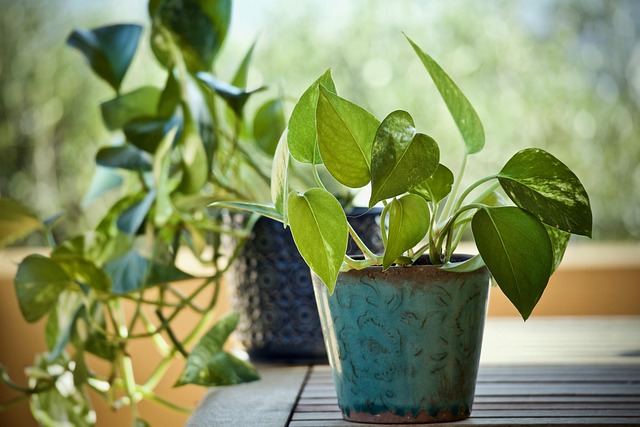
How do you care for a pothos?
Light: Bright, indirect light; survives long periods in low light. Green cultivars such as 'Jade' handle low light best. Water: Let the well-drained potting mix dry out between waterings. It is toxic to cats and dogs, so keep it out of their reach.
About Pothos
Pothos (Epipremnum aureum) is a trailing and climbing aroid native to the Society Islands, and one of the easiest houseplants to grow. NC State Extension notes it prefers bright, indirect light, survives long periods in low light, and should dry out between waterings. Cultivars include Golden, Marble Queen, Neon, Jade and N'Joy. It is toxic to cats and dogs.
Pothos quick facts
- Botanical name
- Epipremnum aureum, formerly Scindapsus aureus
- Family
- Araceae (arum family)
- Native to
- Society Islands (French Polynesia)
- Light
- Bright, indirect light; survives long periods in low light. Green cultivars such as 'Jade' handle low light best.
- Water
- Let the well-drained potting mix dry out between waterings.
- Feeding
- Every other month, except in winter.
- Size
- Vines can reach 12 m (40 ft); container plants usually keep juvenile leaves unless given a support to climb.
- Propagation
- Stem cuttings root easily in water.
- Cats and dogs
- Toxic. Toxic to dogs and cats. The ASPCA lists insoluble calcium oxalates, causing oral irritation, drooling, vomiting and difficulty swallowing. Source: ASPCA
Sources: NC State Extension: Epipremnum aureum; ASPCA: Golden Pothos
Pothos guides
- Pothos care (Epipremnum aureum): light, watering, pruning and common problems
- Pothos varieties: every common type compared, and the "pothos" that are not Epipremnum aureum
- Pothos aerial roots: identify the node before pruning or propagating
- Pothos vs philodendron: how to tell them apart, and how their care differs
Pothos care at a glance
- Light
- Low to bright indirect. Highly adaptable but grows faster with variegation in bright indirect light. Grow lights: Does well under standard indoor lighting and grow lights. One of the easiest plants for rooms without natural light.
- Watering
- Water every 1-2 weeks. Look for: leaves begin to wilt and curl slightly.
- Humidity
- Tolerates 30-70% humidity — not fussy about moisture in the air. Standard home conditions are fine.
- Temperature
- Comfortable between 60-85°F. Keep away from cold drafts and heating vents.
- Soil
- Standard potting mix.
- Pets
- Toxic to dogs and cats. The ASPCA lists insoluble calcium oxalates, causing oral irritation, drooling, vomiting and difficulty swallowing.
- Difficulty
- Beginner
Common pothos problems, answered
-
Mold on Pothos Soil: What It Means and How to Stop It
White or grey fuzz on pothos potting mix is usually a fungus feeding on the organic matter in the mix, not on the plant. It isn't usually harmful, but it shows the surface is staying wet. That same wetness favours fungus gnats and root rot.
-
Overwatered Pothos: Triage, Root Check and Recovery Steps
An overwatered pothos sits in mix that stays wet too long between waterings. One heavy watering that drains is not the problem; watering again before the mix dries is. Soft dark roots, a sour smell and wilting in wet mix mean it has become root rot.
-
Pothos Water Propagation: Algae, Biofilm, or Root Rot?
Green film on the glass, in the water or on the roots of a pothos cutting is usually algae. It looks bad but is not root rot. Rot shows as roots or stem tissue that are brown to black and soft or mushy.
-
Pothos Sunburn: Confirm the Damage and Protect New Growth
Pothos sunburn produces pale, bleached, tan, or papery damage on leaves exposed to strong direct light, often after an abrupt increase in exposure.
-
Pothos Aerial Roots: Leave, Train, Trim, or Propagate?
Firm root nubs or strands emerging from Pothos stem nodes are normal aerial roots used by this climbing vine for attachment. Their presence alone does not diagnose thirst, low humidity, or a rootbound pot.
-
Pothos Black Stems: Diagnose Rot, Damage, or Bacterial Wilt
Black pothos stems require inspection of texture, roots, and nearby leaves. Soft tissue at the soil line commonly accompanies wet-media decay, while rapid wilt with blackened veins or bacterial ooze is more concerning for bacterial wilt.
-
Pothos Yellow Leaves: Old Age, Overwatering or Root Rot?
One old leaf yellowing near the base of a vine is normal shedding. Several yellow leaves at once usually mean the mix is staying too wet or drying out too far, with root rot, direct sun, low fertility and pests as the other causes to check.
-
Pothos Leaves Curling: Thirst, Heat, Roots or Pests?
Curling pothos leaves most often point to a dry root ball, but heat or cold from vents, strong light, damaged roots in wet mix, and sap-feeding pests such as thrips can also curl or distort leaves. The pot, the plant's position and the leaf undersides tell the causes apart.
-
Pothos Root Rot: How to Confirm It and What to Cut
Pothos root rot is decay of roots that have sat in mix that stays wet. Roots turn brown to black and soft, their outer layer slips off, and the vine yellows or wilts even though the pot is damp.
-
Pothos Brown Spots: Edema, Cold, Sun or Leaf Spot?
Brown spots on pothos come from wet roots, cold or heat injury, or a leaf disease. Raised, corky bumps under the leaf suggest edema; scattered patches in the middle of the leaf suggest cold; scorched variegated areas suggest sun or heat; wet-looking spots that spread suggest bacteria or fungi.
-
Spider Mites on Pothos: Spot the Stippling, Then Treat
Spider mites on pothos show as fine pale stippling on the leaves, often with silk webbing on the undersides and around stems. They are arachnids, not insects, and they build up fastest in hot, dry, dusty conditions.
-
Pothos Brown Tips: Dry Air, Drafts, Thirst or Salts?
Brown tips on pothos are leaf edges drying out. The usual causes are dry air or drafts from vents, a mix that dries out too far, intense light, or fertilizer salts building up in the pot.
-
Pothos Nodes: Which Ones to Pick and Where to Cut
A pothos cutting roots from its nodes, the points where a leaf joins the stem, often marked by a brown aerial root nub. A cutting with no node, or a leaf on its own, will not grow into a new vine.
-
Fungus Gnats on Pothos: Dry the Mix, Then Target Larvae
Small dark flies around a pothos pot are usually fungus gnats breeding in potting mix that stays wet. The adults are a nuisance; the larvae live in the damp mix and feed on organic matter, fungi and sometimes fine roots.
-
Mealybugs on Pothos: Find Them, Treat Them, or Start Over
Mealybugs are one of the most common insect pests of indoor pothos. They look like white, cottony tufts in leaf axils, on leaf undersides and sometimes on the roots, and they leave sticky honeydew that can turn black with sooty mould.
-
Thrips on Pothos: Silver Streaks, Black Specks, What to Do
Thrips on pothos leave silvery streaks and flecks with tiny dark, tar-like specks of excrement, and new leaves may open crinkled or curled. The insects are slender, 1–2 mm long and easy to miss, so confirm them before treating.
-
Pothos Drooping: Thirsty or Root Damage? Check the Pot
A drooping pothos is short of water in its leaves. Dry mix and a light pot mean it is thirsty. Wet mix and a heavy pot mean the roots are damaged and cannot take water up, so more water makes it worse.
-
Scale on Pothos: Brown Bumps That Flake Off, and the Fix
Scale on pothos looks like small tan to brown bumps on stems and leaf veins that can pass for part of the plant. They flake off under a fingernail. Soft scales leave sticky honeydew; armored scales do not.
-
Is Pothos Toxic to Cats and Dogs? Signs and What to Do
Yes. The ASPCA lists golden pothos (Epipremnum aureum) as toxic to dogs and cats. It contains insoluble calcium oxalates, which cause oral irritation, intense burning of the mouth, tongue and lips, excessive drooling, vomiting and difficulty swallowing.
-
Leggy Pothos: Why Vines Go Bare and Where to Prune
A leggy pothos has long, bare vines with leaves bunched at the tips. Two things combine: older leaves naturally yellow and drop from the base of each vine, and low light makes new growth spindly and stretched toward the window.
-
Pothos Losing Variegation: More Light, or Reversion?
A variegated pothos that puts out greener, smaller leaves is usually short of light. Whole vines of solid green leaves can also be reversion, where an unstable variegated cultivar throws out vigorous all-green growth.
-
Bigger Pothos Leaves: Climbing Support, Moss Poles, Light
Pothos kept as a trailing houseplant stays in its juvenile form, with leaves a few inches long. Given something to climb and enough light, the vine can start producing larger, more mature leaves on the climbing section.
-
Pothos Bacterial Infection: Leaf Spot, Soft Rot or Wilt?
Bacterial infection on pothos shows as water-soaked leaf spots that turn brown or black, often with a yellow edge, or as soft, mushy, bad-smelling rot in stems and cuttings. Wilting with blackened veins points to bacterial wilt. No spray cures infected tissue; removal, dry leaves and sanitation are the treatment.
-
Do Pothos Cuttings Need Rooting Hormone?
Pothos cuttings do not need rooting hormone. Extension sources describe pothos as rooting easily in water or moist media within a few weeks, as long as each cutting has a node. Hormone is optional; a node, warmth, humidity and clean conditions matter more.
-
Pothos Yellowing After Repotting: Shock, Wet Mix or Rot?
One or two older pothos leaves yellowing after a repot is usually the plant adjusting. Several leaves yellowing while the new mix stays wet means the roots are getting too much water, often from an oversized pot or dense mix. Fresh mix with fertilizer in it plus extra feeding can also yellow and blacken leaf edges.
Questions about Pothos
Is pothos toxic to cats and dogs?
Toxic to dogs and cats. The ASPCA lists insoluble calcium oxalates, causing oral irritation, drooling, vomiting and difficulty swallowing.
How fast does pothos grow?
Pothos grows at a fast rate indoors. Typical mature size: trailing vines up to 10 ft indoors.
How do I propagate pothos?
Propagate pothos by stem cutting.
Is pothos easy to care for?
Pothos is rated beginner difficulty. It is a good choice for beginners.
Get the Plant Mortality Checklist
Check moisture, roots and recent care changes before choosing a treatment. A practical checklist to keep.
Your checklist is ready!
We also sent it to your inbox. Check your email for the full download.
Open the ChecklistFree. No spam. Unsubscribe anytime.
Go deeper with a course
The Pothos Blueprint Pack is a paid PlantGrail course that covers Pothos care in more depth than this page.
See the course